


“I need a crane to lift materials to the third floor.”
“Do you mean a mobile crane, sir? Or a truck crane with a bed in the back for carrying goods?”
Conversations like this happen more often than you think. Mobile crane Dan truck mounted crane are two terms that are often considered the same, used interchangeably, and eventually lead to misunderstandings that are only realized when the wrong unit has arrived at the location.
Whereas, both types of tools are designed to very different functions. Choosing incorrectly isn't just about terms – it can mean the job can't be done, or you're paying for capacity you don't need.
This article will explain the fundamental differences between mobile cranes and truck cranes from three of the most important aspects: mobility, lifting capacity, and workspace efficiency — so you can order the right unit on the first phone call.
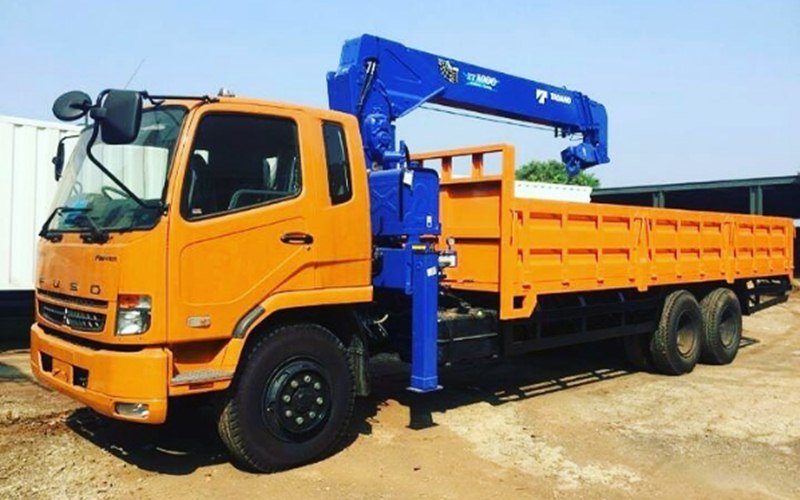
What is a Mobile Crane?
Mobile crane is a crane built on top of special chassis designed from the outset as a single unit with its crane system. This unit features a telescopic boom (a boom that can extend and retract), an outrigger system for stability during operation, and a dedicated operator cabin for controlling the crane — separate from the driver's cabin for road travel.
Main characteristics of a mobile crane:
- Chassis purpose-built — specially designed as a crane platform, not an ordinary truck modification
- Long telescopic boom — can reach tens of meters, with flyjib options for additional reach
- Full outrigger — laid out for maximum stability during lifting
- Two modes of operation — travel mode and lifting mode with separate operator cabin
- Large lifting capacity — starting from 8 tons up to 55 tons (and more) in our fleet
- Main function: lifting and positioning heavy loads precisely at the worksite
This is the type of crane you need when the job is lifting something and placing it in a specific position — whether it's steel frames, factory machinery, large AC units, or construction materials to the upper floors of a building.
🔗 Learn more about Types of cranes and their functions, or see details Rent a mobile crane We.
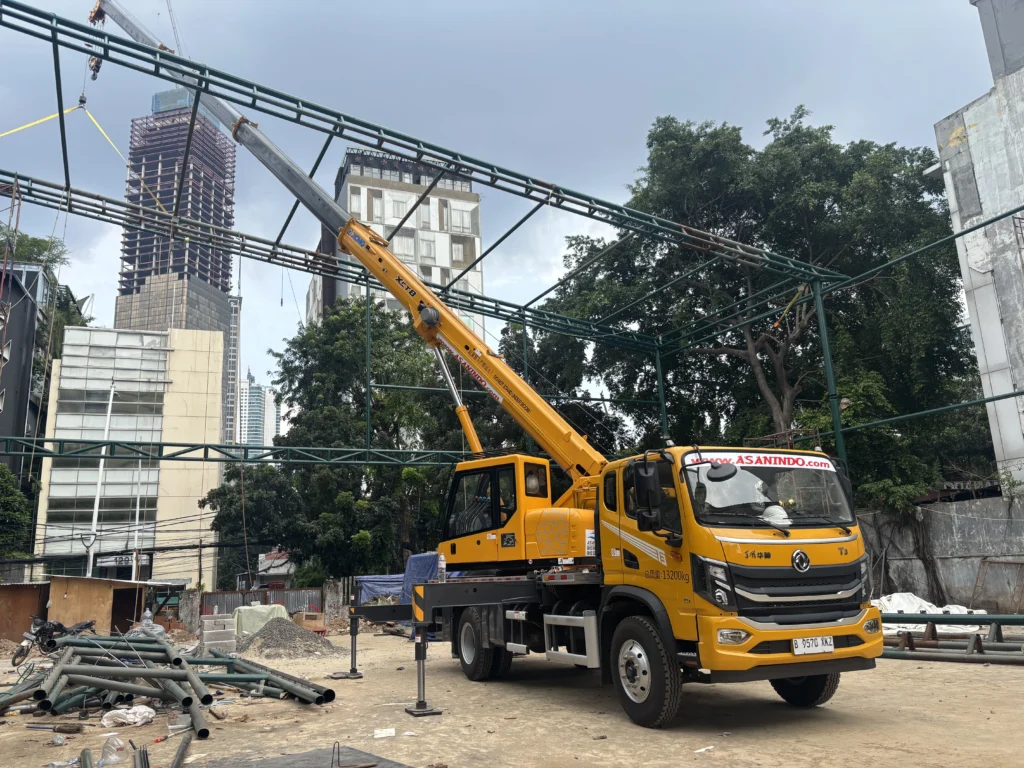
What is a Truck Crane (TMC - Truck Mounted Crane)?
Truck Mounted Crane (TMC), which on the field is also often called “crane truck”, is a type of crane knuckle boom or folding boom knuckle-jointed arms like elbows mounted at the rear Commercial truck chassis — Basically, it's a cargo truck equipped with a hydraulic crane at the rear.
Key characteristics of TMC:
- Built on a common truck chassis — can be a Colt Diesel truck, dump truck, or flatbed truck
- Boom of the knuckle/folding type — arms that fold like elbows, not long and telescopic
- Does not have outriggers as large as a mobile crane — some models have small stabilizers
- One cabin — the driver simultaneously operates the crane from the same cabin or a remote control next to the unit
- Smaller load capacity — generally several tons, focusing on light-to-medium materials
- Main function: load and unload goods from/to the truck bed itself, or moving light materials over short distances
TMC is the tool you see every day delivering construction materials, pipes, iron, or other goods to project sites — then the crane behind it is used to unload the goods from the truck bed to the storage location.
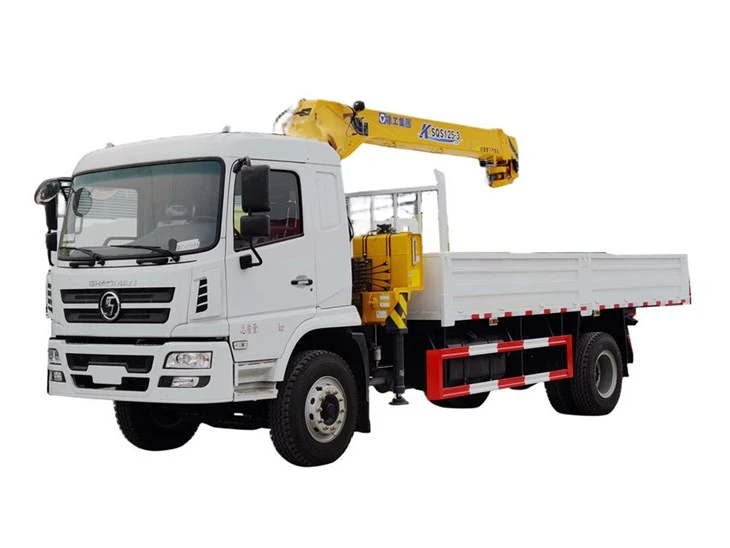
3 Fundamental Differences: Mobility, Capacity, and Field Efficiency
Now that we understand the definition of each, let's compare them directly from the three aspects that are most often considered when choosing a unit:
🚛 1. Mobility
Mobile Crane: Although its name is “mobile,” the mobile crane is actually designed with priority on job stability, not long-distance travel speed. Mobile cranes can travel on public roads under their own power (self-propelled) to a project site. However, once on-site, they require space to deploy their outriggers and setup time before they can begin working.
Truck Crane (TMC): TMC basically is a truck — its mobility is identical to a regular cargo truck. It can access various locations accessible by trucks, park, and immediately use its crane without significant setup. However, this mobility is limited to Self-unloading material function — not for lifting loads from one point to another with high precision.
Conclusion: Mobile cranes are more “mobile” in the sense of Ability to work in various positions with precision, while TMC is more “mobile” in terms of Functioning as a transport vehicle that can also load and unload itself.
⚖️ 2. Lifting Capacity
Mobile Crane: This is where the difference is most significant. Mobile cranes are designed to heavy lifting — with capacities ranging from 8 tons to tens of tons (55 tons in our fleet, even more for larger classes). This capacity is supported by a boom structure, hydraulic system, and outriggers specifically designed to withstand heavy loads at various working radii.
Truck Crane (TMC): The TMC is designed to light to medium loads — generally a few tons, sufficient for materials like rebar, pipes, lightweight panels, or standard construction equipment. TMC is not designed for and is not safe for lifting heavy loads such as production machinery, large chiller units, or heavy structural components.
Conclusion: If the load to be lifted has significant weight (above several tons) and/or must be placed at a specific radius or height, A mobile crane is the only correct and safe option..
🏗️ 3. Field Efficiency
Mobile Crane: With the outriggers fully extended, the mobile crane provides maximum stability for lifting in various terrain conditions — including slightly uneven terrain, provided the ground conditions are adequate to support the outrigger load. Mobile cranes can also be positioned at a certain distance from the work point and still lift loads precisely using the long boom.
Truck Crane (TMC): TMC works most efficiently when the truck's position is already close to the material destination point. Because the boom is shorter and has a limited reach, the TMC is inefficient for jobs requiring long reach or significant height. The TMC is also more susceptible to uneven terrain because its stability relies on a standard truck chassis, rather than a full outrigger system like a mobile crane.
Conclusion: For jobs involving distance, height, or challenging terrain, mobile cranes provide Significantly better job flexibility and security.
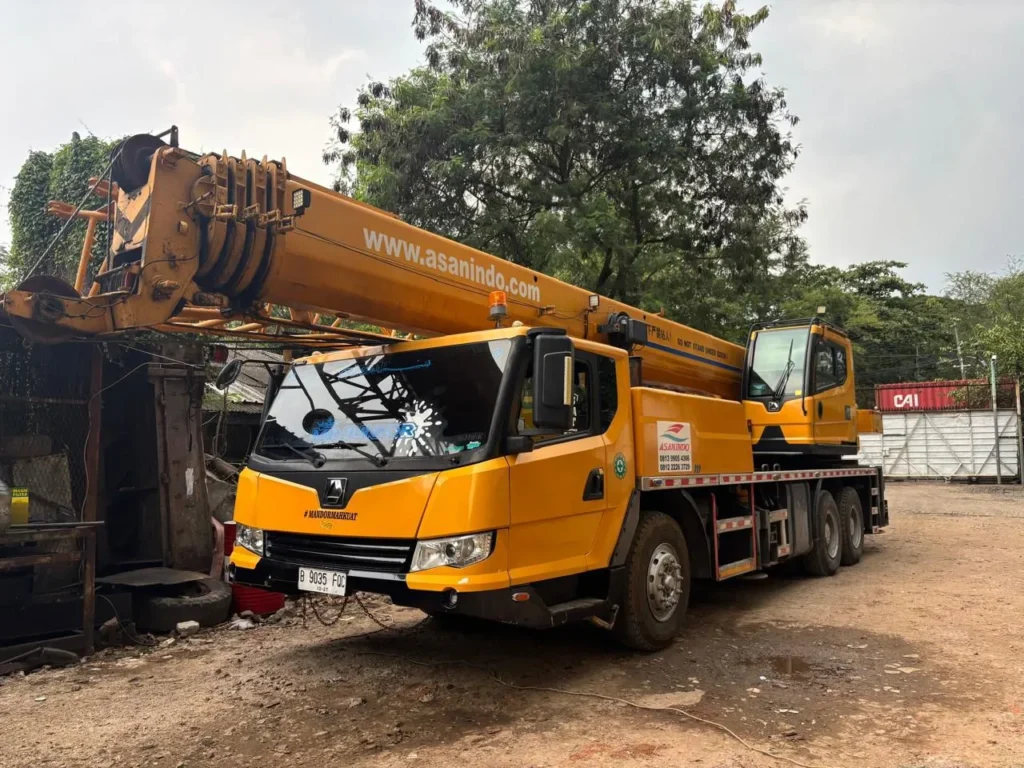
Three aspects, three clear differences — mobility, capacity, and worksite efficiency determine which unit is right for your job.
Summary Table: Mobile Crane vs. Truck Crane (TMC)
| Aspect | Mobile Crane | Truck Crane (TMC) |
|---|---|---|
| Chassis | Purpose-built cranes | Commercial truck chassis |
| Boom Type | Telescopic, with + flyjib | Knuckle/folding boom |
| Outrigger | Full, unfolded when working | Minimal or none |
| Lifting Capacity | 8 – 55 ton (our fleet) | Generally, several tons |
| Cabin Operator | Separate (travel cabin + crane cabin) | One cabin / remote next to the unit |
| Main Function | Lifting & positioning heavy loads | Unload and load materials from the truck bed |
| Scope of Work | Distant (long boom, wide radius) | Limited (around the truck's position) |
| Suitable for | Construction, machinery installation, steel erection | Delivery & unloading of light materials |
So, When Do You Need a Mobile Crane?
Based on the comparison above, here are the situations where mobile crane is the correct choice — not TMC:
- Lifting Factory machine, chiller unit, or industrial equipment to a specific position
- ✅ Erection of steel frames, girders, or precast panels in construction
- Moving the load to altitude — upper floor of a building, rooftop, or tall structure
- Jobs that require long range from the crane's position to the work point
- Loaded with weight more than 1-2 tons that must be placed with precision
- ✅ Job heavy lifting at construction sites, industrial areas, or ports
If your needs include one of the points above, then what you need is mobile crane — not a regular crane truck, although the two terms are often confused in everyday conversation.
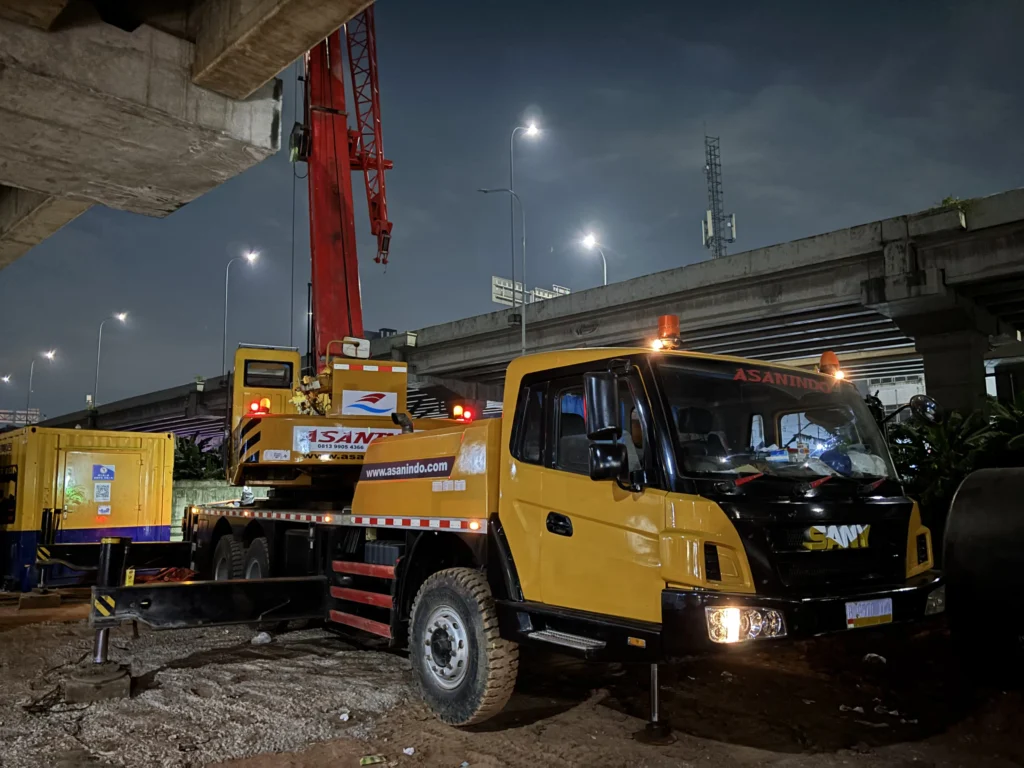
Tips to Avoid Wrong Unit Orders
To avoid misunderstandings like those at the beginning of this article, please convey the following information when contacting the crane vendor:
Explain its weight, not just the type of item “I need to lift a machine of about 3 tons to the second floor” is much clearer than “I need a crane to lift a machine.”.
2. Explain whether the item is already at the location or needs to be delivered. If items need to be delivered and lifted to a specific position simultaneously, this can involve two different types of requirements—delivery (standard truck or TMC) and precision lifting (mobile crane).
3. Explain the required height or distance “Must be raised to the 3rd floor” or “must be moved 10 meters from the truck's position” provide a clear picture of the required range.
4. Mention if there are any special precision requirements Jobs like placing AC units into tight engine rooms or positioning girders in very specific locations require the precise control that only mobile cranes can provide.
When in doubt, contact our team directly. Just tell us what your job is, as it is—we'll figure out the right unit without you needing to understand all these technical terms yourself.
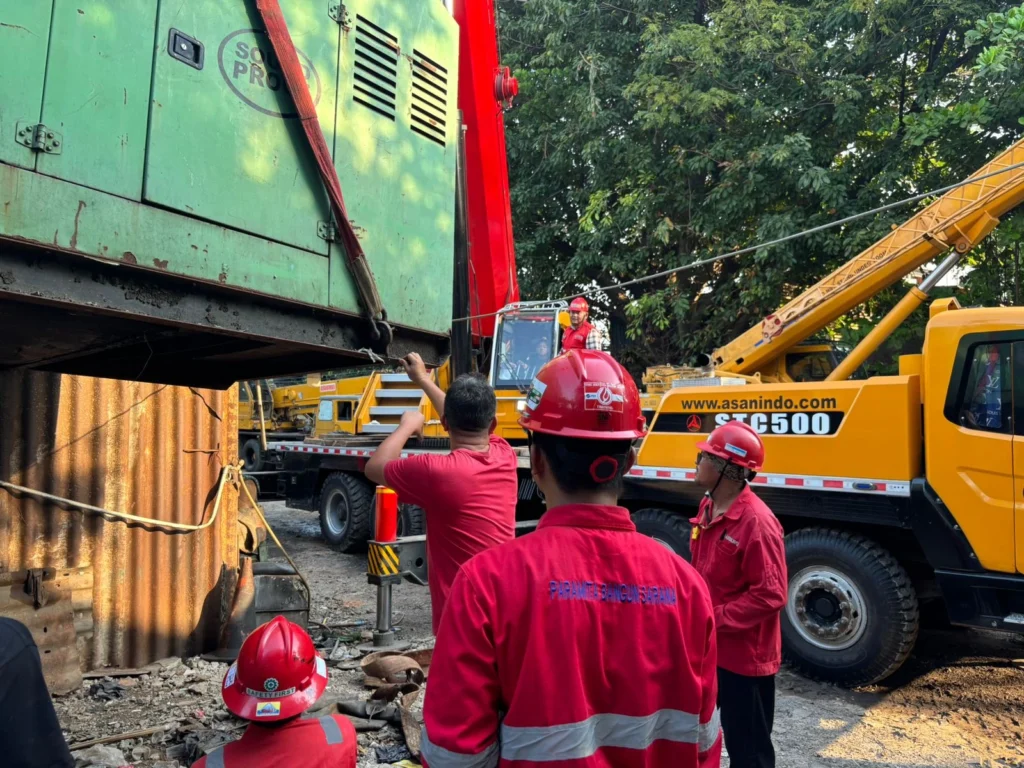
FAQ: Frequently Asked Questions About Mobile Cranes and Truck Cranes
Q: Does Rentalcranejabodetabek.com provide TMC (truck crane for loading and unloading)? Our service focus is mobile crane for heavy lifting and precision lifting needs — capacities from 8 tons to 55 tons. If your needs are for loading and unloading light materials from vehicles, contact us to discuss your specific requirements and we will provide suitable recommendations.
What if I'm unsure of the weight of the load I'll be lifting? A: Provide your best estimate, including dimensions and material/equipment type. Our experienced team can estimate weights based on descriptions and help ensure the ordered unit has a safe capacity margin.
Can mobile cranes be used for loading and unloading like TMC? Technically it's possible, but it's generally not cost-efficient. Mobile cranes have rental rates designed for heavy lifting jobs, not routine loading and unloading of light materials. If your needs are purely for light loading and unloading, other options might be more economical.
Q: I saw the term “crane truck” in another ad—is that the same thing as your mobile crane? A: The term “crane truck” is often used loosely in the field to refer to both of these types of units, which is a source of confusion. To be sure, always ask for the lifting capacity (in tons), type of boom (telescopic or folding), and whether the unit has outriggers. Or, contact us directly — we'll clarify which unit you mean.
Contact Us — Free Crane Selection Consultation
Don't be confused by technical terms. Tell us about your job, and we'll make sure the right unit – a mobile crane with the appropriate capacity – arrives at your site.
📞 WhatsApp / Phone (Fast Respon 24 Hours):
0813-8080-1729
(Davin Aubade)
🌐 Website: www.rentalcranejabodetabek.com
“Confused about which unit is right for your job? Contact us — tell us your needs as they are, and we will recommend the mobile crane with the most suitable capacity.”
Related Articles & Services
- 🔗 7 Types of Cranes and Their Functions Complete guide to all types of cranes
- 🔗 Mobile Crane & Truck Crane Rental — full armada, rapid mobilization
- 🔗 8 Ton Crane Rental — Rp 3,500,000/shift
- 🔗 Crane Rental 25 Ton — IDR 4,800,000/shift
- 🔗 Crane Rental 30 Ton — IDR 5,500,000/shift
- 🔗 Crane Rental 50 Ton — 8,000,000 Indonesian Rupiah/shift
- 🔗 Crane Rental 55 Ton SANY STC550C5 — Rp 8,600,000/shift
- 🔗 Crane Rental Price Per Shift — full rate 2026
- 🔗 24-Hour Mobile Crane Rental Near You — Rapid response for rush orders