


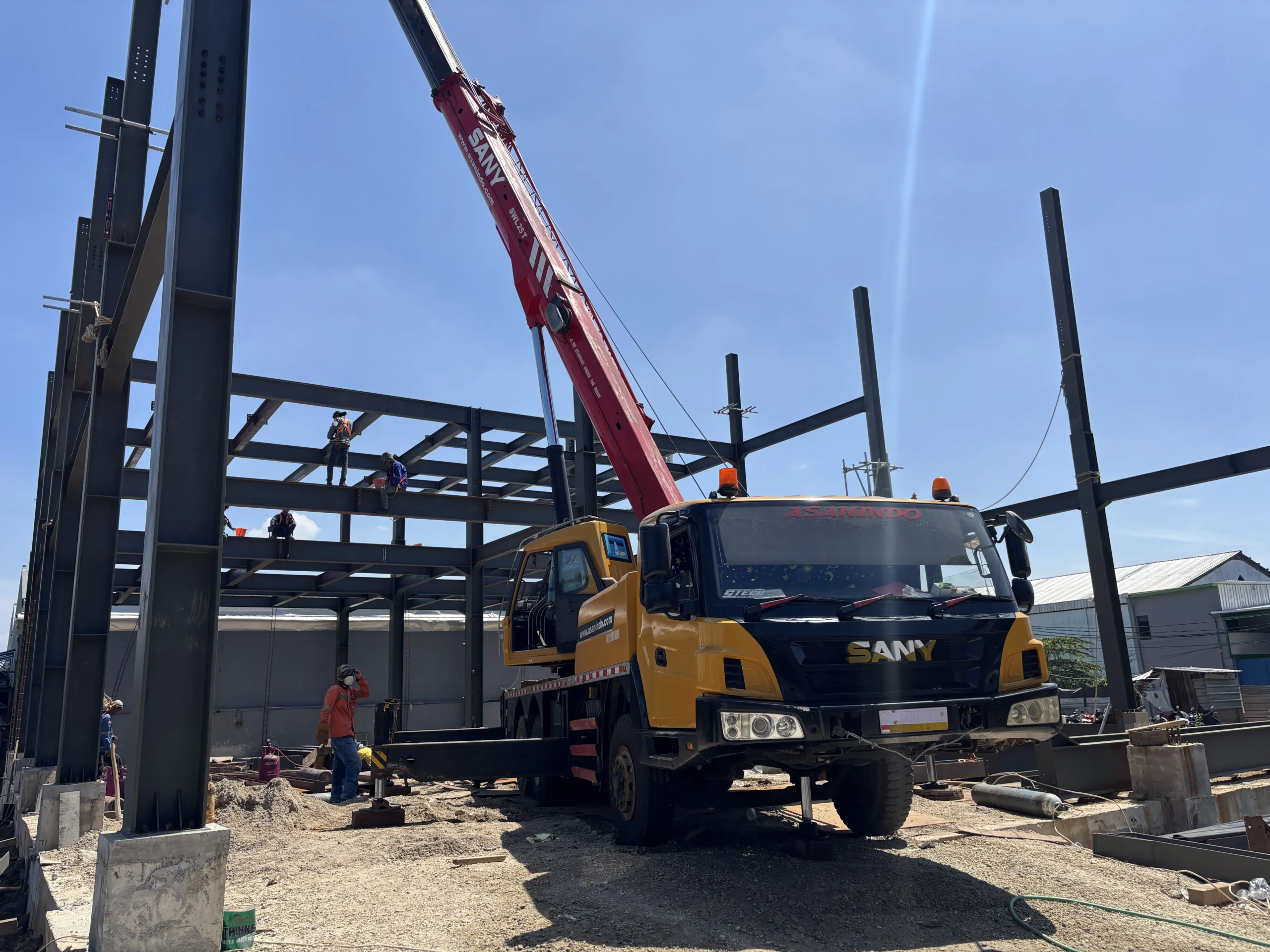
Choosing the wrong type of crane can mean two things: the crane won't work optimally at your site, or you'll overpay for capacity and a type that doesn't meet your needs.
In reality, the world of cranes is much more diverse than many imagine. There are cranes that can drive themselves on highways, cranes that must be permanently installed for months, cranes designed specifically for muddy terrain, and cranes built specifically to lift cargo from the belly of a ship.
Each has its strengths, weaknesses, and situations where it is the best choice — and none can be used for all conditions at once.
This article guides you to understand 7 types of cranes most commonly used in the construction and heavy industry, along with their specific functions, advantages, disadvantages, and the most appropriate situations for their use.
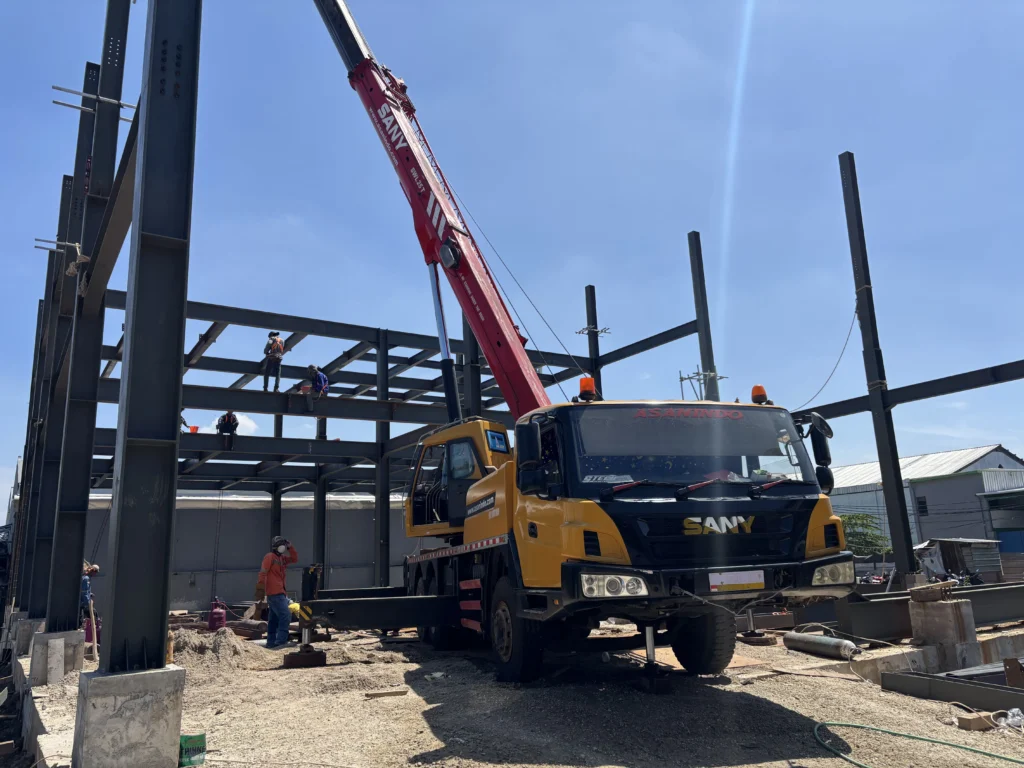
why is it important to understand crane types before renting?
Imagine you need a crane to move a large machine in a narrow factory aisle. You order a large mobile crane—but it turns out the crane can't fit. The project grinds to a halt, mobilization costs are spent, and you have to start over.
Or vice versa: a 20-story building construction project that requires a crane on site for 6 months. You rent a mobile crane daily — when a permanently installed tower crane would be far more efficient and cost-effective for that duration.
The two scenarios above are actual mistakes that happened on-site due to a lack of understanding of crane types. After reading this article, you will not make the same mistake.
1. Mobile Crane (Truck Crane) — Most Popular and Most Versatile
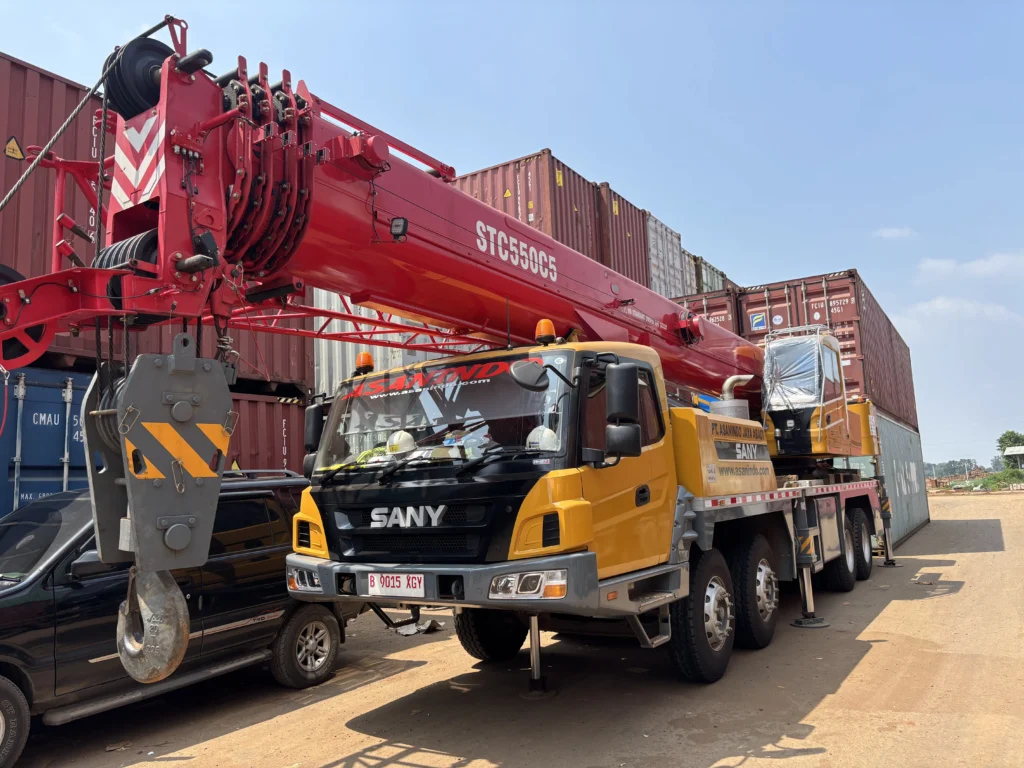
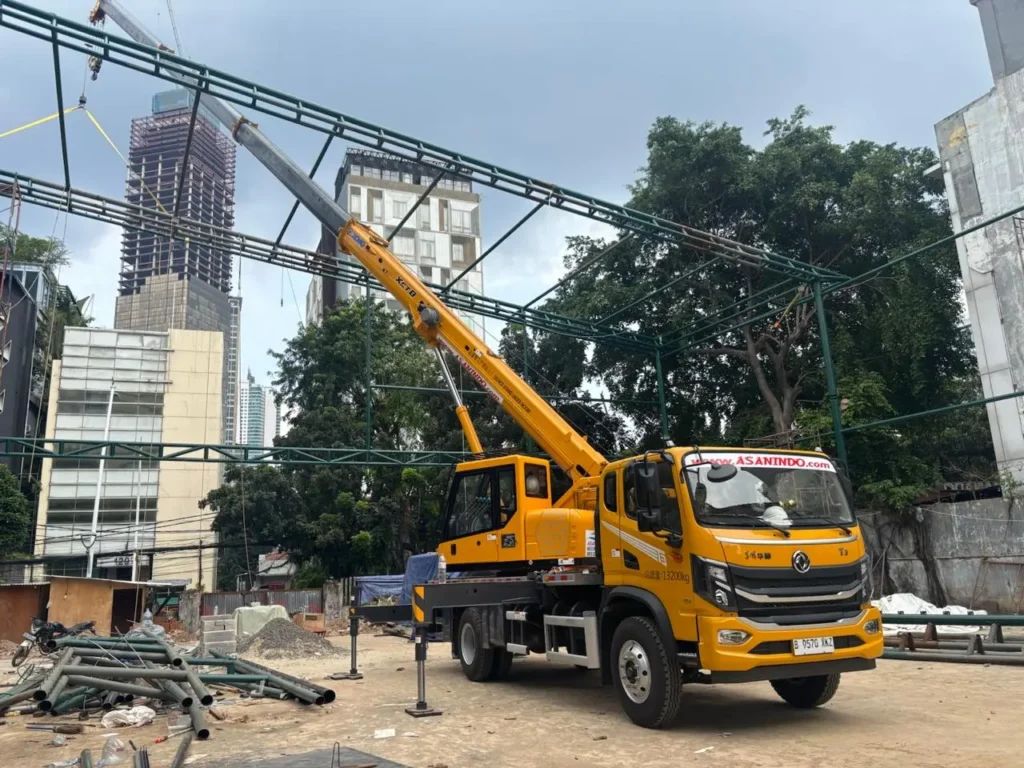
Mobile crane — or often called truck crane — is the type of crane most widely used in the commercial construction industry in Indonesia, including throughout the Jabodetabek region. And there's a very strong reason behind its popularity.
What is a Mobile Crane?
A mobile crane is a crane built on a wheeled vehicle chassis with a self-propelled drive system. This means the crane can be driven directly on public roads from one location to another – just like a truck, without needing an additional transport vehicle.
Upon arriving at the project site, the crane “transforms” from a vehicle into a lifting machine: outriggers are extended for stability, the boom is raised and extended, and the operator moves to the upper cabin to operate the lift.
Advantages of Mobile Crane:
- ✅ Mobilization is very easy and fast — can go directly to the next location on their own
- ✅ Relatively quick setup — 30 minutes to 2 hours depending on size
- ✅ No trailer fee required — significant savings, especially for multi-location projects
- ✅ Available in various capacities — from 8 tons to 55 tons (and more)
- ✅ Flexible for short and medium-term projects
- ✅ Ideal for urban areas like Jabodetabek with varied road access
Mobile Crane Disadvantages:
- ❌ Not suitable for very narrow areas — Unit width limits access in a restricted aisle
- ❌ Not ideal for muddy terrain or soft ground — Tire pressure is not optimal for extreme off-road conditions
- ❌ Limited capacity compared to heavy-duty crawler cranes for ultra-heavy lifting jobs
Best Suited For:
Construction of commercial buildings, erection of steel frames, installation of factory machinery, billboard installation, renovations, medium infrastructure projects, and all work requiring site mobility.
🔗 Our services: We provide Rent a mobile crane from capacity 8 tons, 25 tons, 30 tons, 50 tons, until 55 ton (SANY STC550C5) — ready to serve all of Jabodetabek.
2. Tower Crane — King of High-Rise Construction
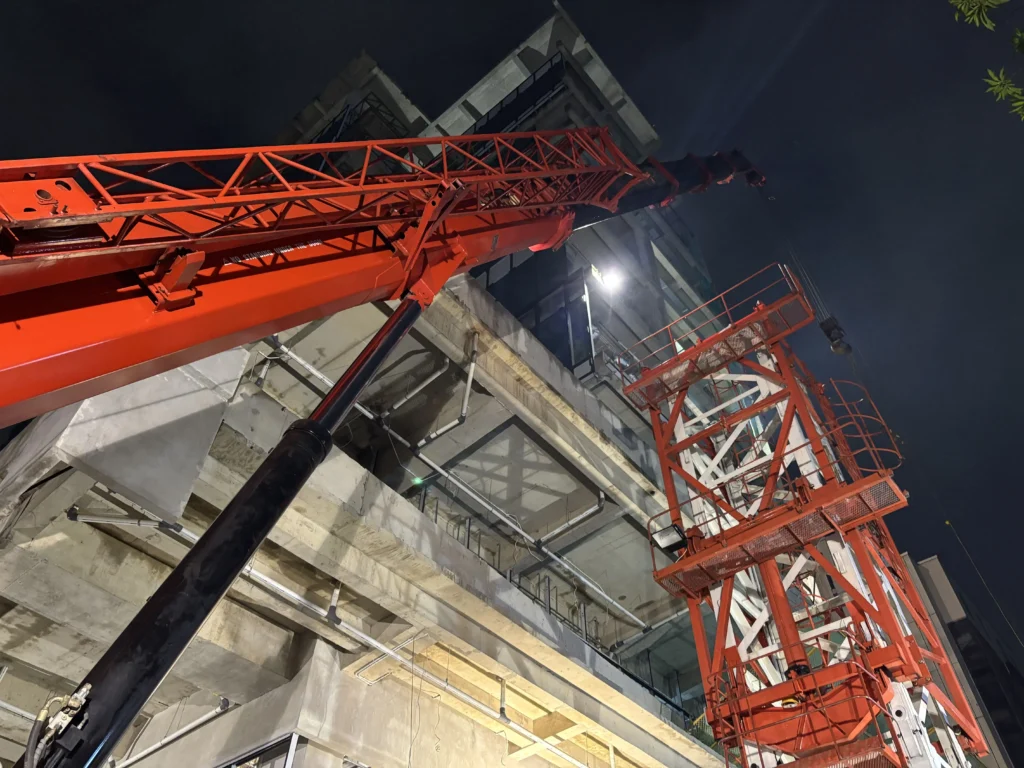
If a mobile crane is the “workhorse” of a medium-sized project, then a tower crane is icon From the construction of high-rise buildings. It is almost impossible to build a skyscraper without a tower crane.
What is a Tower Crane?
A tower crane is a vertical crane that is permanently (or semi-permanently) installed on a construction site. Its structure consists of a mast (vertical tower) that stands upright, a jib (horizontal arm) that rotates 360 degrees above the mast, and a counterweight on the opposite side to balance the load.
Tower cranes cannot move on their own—they are mounted on special foundations and stay in one spot throughout the construction period. However, what makes them extraordinary is their ability reaching a very large area around the project site, with consistent lifting capacity at extreme heights.
Advantages of Tower Crane:
- ✅ The horizontal range is very wide. — the jib can reach 60–80 meters from the center
- ✅ Able to work at extreme heights — unlimited by boom length
- ✅ Consistent lift capacity at all altitudes
- ✅ Very efficient for long-term projects in a fixed location
- ✅ Can “grow” with the building — the mast can be extended as the building height increases
Tower Crane Disadvantages:
- ❌ Installation and dismantling are very complex It takes days to weeks
- ❌ Cannot move location — it must be completely dismantled before moving
- ❌ Not economical for short-term projects — setup fee too high
- ❌ Requires a special foundation that must be planned from the building design
Best Suited For:
Construction of high-rise buildings, apartments, hotels, and large infrastructure projects that take months to years to complete at a fixed location.
Crawler Crane — Maximum Strength in Challenging Terrain
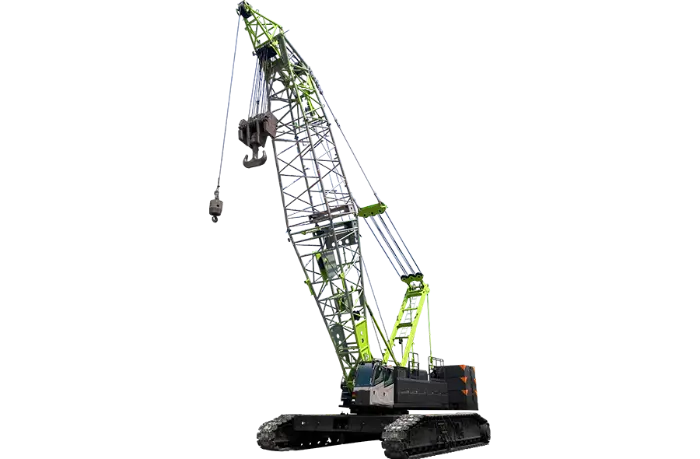
Crawler cranes are the choice when the job is too heavy or the terrain is too difficult for a mobile crane, but does not require a permanent installation like a tower crane.
What is a Crawler Crane?
Crawler cranes are large cranes that move using steel track —like bulldozers or excavators, not rubber tires like mobile cranes. These tracks distribute the unit's weight evenly over a larger surface area, allowing crawler cranes to operate on soft, muddy, or uneven terrain that would cause a mobile crane to sink.
Because of its enormous weight, the crawler crane Cannot walk on the highway — it must be transported using a special low-bed trailer and requires a rather lengthy assembly and disassembly process.
Advantages of Crawler Crane:
- ✅ Very large lifting capacity - Available up to thousands of tons
- ✅ Stable on soft, muddy, or uneven ground
- ✅ No outrigger required — the track provides natural stability
- ✅ Can move while lifting weights (traveling with load) under certain conditions
- ✅ Ideal for heavy, long-term projects at a single location
Crawler Crane Disadvantages:
- ❌ Cannot walk on the highway — the trailer must be transported, the mobilization costs are very high
- ❌ The setup process is very long. — can take several days
- ❌ Not economical for short projects due to the large mobilization costs
- ❌ Not suitable for areas with limited space — unit dimensions are very large
Best Suited For:
Very large-scale heavy lifting projects, long-span bridge construction, petrochemical and power plant projects, as well as work in mining areas or land with unstable soil conditions that do not allow for mobile cranes.
4. Rough Terrain Crane — Solution for Off-Road Terrain
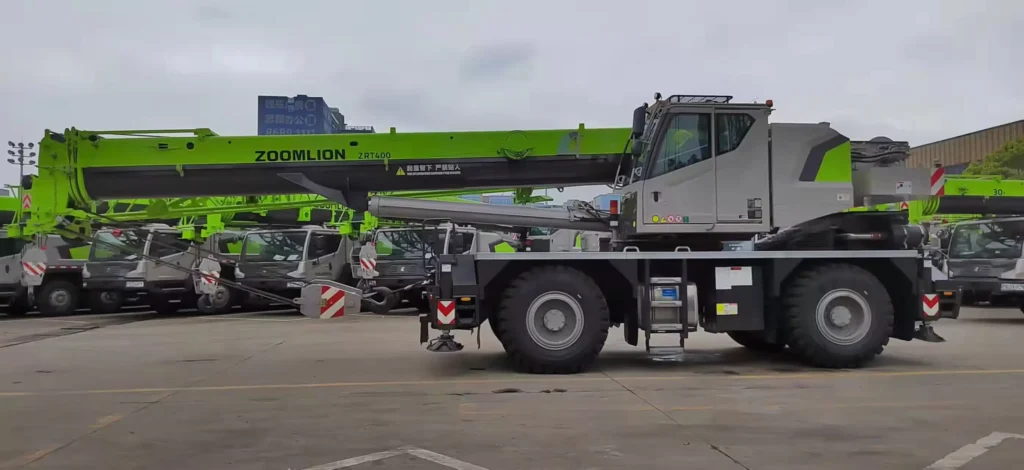
Rough terrain cranes are a type that often becomes the “middle ground” between mobile cranes and crawler cranes for specific terrain conditions.
What is a Rough Terrain Crane?
Rough terrain cranes are four-wheeled cranes specifically designed to operate on uneven terrain and off-road conditions—rocky ground, unpaved construction areas, or remote locations inaccessible to regular trucks.
What sets it apart from a regular mobile crane is large-sized off-road ban and a four-wheel drive (4WD) system that provides much better traction on difficult terrain. However, unlike crawler cranes, rough terrain cranes still using tires — meaning it can move locations without a trailer, although it's not as flexible as a mobile crane on public roads.
Advantages of Rough Terrain Cranes:
- ✅ Can operate in off-road terrain that cannot be accessed by a regular mobile crane
- ✅ More mobile than a crawler crane — does not require a trailer for movement within the project area
- ✅ Faster setup relative to crawler cranes
- ✅ Short turning radius — more agile in confined areas
Disadvantages of Rough Terrain Crane:
- ❌ Cannot drive on the highway at normal speed like a mobile crane
- ❌ Limited lifting capacity compared to crawler crane
- ❌ Higher rent costs from mobile cranes with similar capacity
Best Suited For:
Projects in remote locations, mining areas, oil and gas projects in undeveloped land, or construction in hilly and rocky terrain that is inaccessible by ordinary vehicles.
5. Overhead Crane / Gantry Crane — Indoor Crane
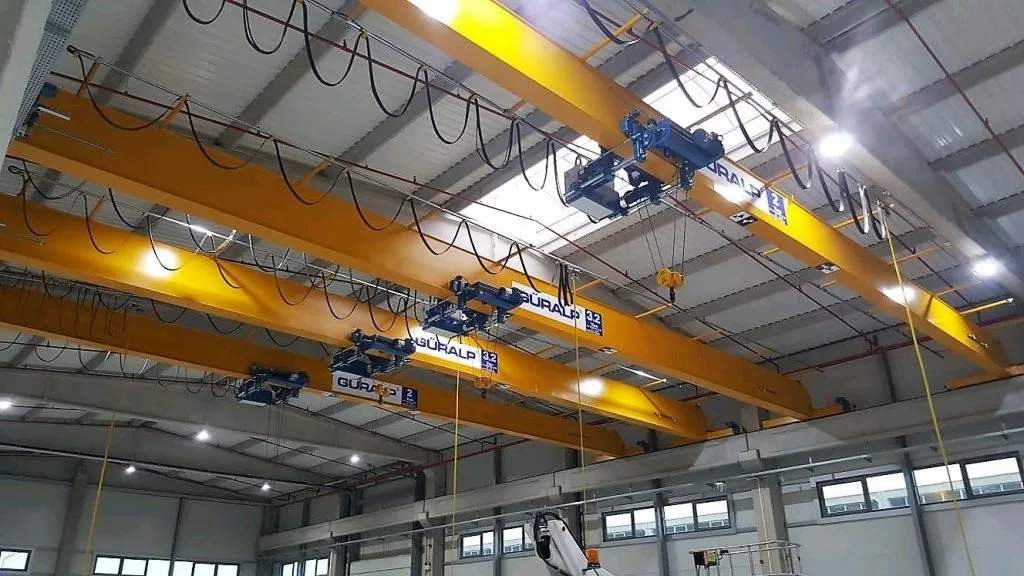
If the previous four types operate outdoors, overhead cranes are specifically designed for working inside a building or industrial facility.
What is an Overhead Crane?
An overhead crane (also called a bridge crane or gantry crane) is a crane system installed on rails mounted on the ceiling or an overhead structure of a facility. The crane moves horizontally along the rails—forward-backward and left-right—to reach the entire area below.
Unlike all previous types of cranes that came and went, the overhead crane is permanent installation in a production facility, warehouse, or workshop.
Advantages of Overhead Crane:
- ✅ To reach the entire area under the tracks precisely
- ✅ Does not require floor space — moving overhead
- ✅ Very efficient for routine operations in factories and warehouses
- ✅ High precision to move material in the production process
- ✅ Can be operated continuously during production hours
Overhead Crane Disadvantages:
- ❌ Can only be used in facilities with rails
- ❌ Initial installation is expensive — requires strong building structures
- ❌ Cannot be used outdoors
- ❌ Limited capacity by facility design
Best Suited For:
Steel mills, manufacturing facilities, large logistics warehouses, shipyards, and other industrial facilities that require routine material handling within the building.
6. Mini Crane / Pick and Carry Crane - The Most Compact Solution
Not all jobs require large cranes. And not all locations can accommodate large cranes. This is where mini cranes show their value.
What is a Mini Crane?
Mini cranes (or pick and carry cranes) are small and very compact cranes specifically designed for operates in a very confined space — inside buildings, in narrow corridors, or in locations completely inaccessible to normal-sized cranes.
Some mini crane models can even be folded to fit through standard doorways, then reassembled inside the building to perform lifting tasks within the building's interior.
Advantages of Mini Crane:
- ✅ Can fit into a very narrow space — including inside the building and the elevator
- ✅ Setup and operation are very fast.
- ✅ Most affordable rental cost
- ✅ No outrigger required In some models, the footprint is very small.
- ✅ Ideal for interior work that cannot be reached by other cranes
Disadvantages of Mini Crane:
- ❌ Lifting capacity is very limited — generally under 5 tons
- ❌ Not suitable for heavy work
- ❌ Slower lifting speed
Best Suited For:
Installation work inside buildings (small MEP, HVAC), interior renovations, equipment relocation in narrow corridors, work in basements or parking areas, and installations requiring cranes are all considered building penetrations.
🔗 For work in confined areas but with more capacity than a mini crane, 8 Ton Crane Rental We are a stronger choice while maintaining compact dimensions.
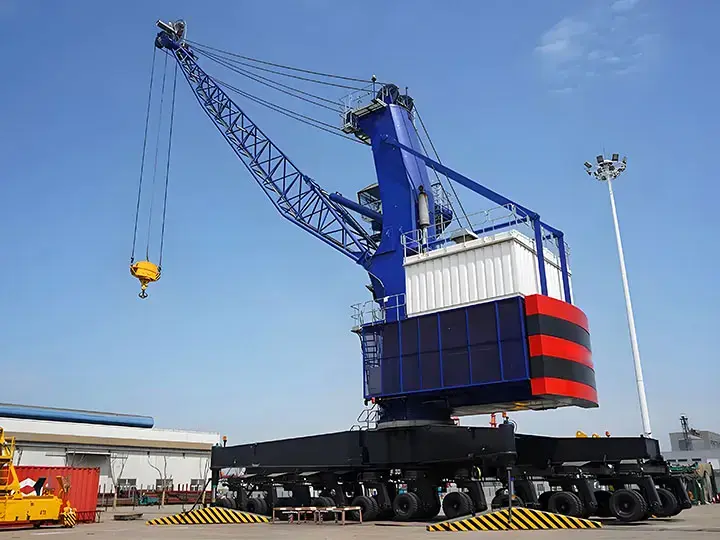
Crane Pelabuhan (Marine / Port Crane) — Maritime Logistics Specialist
The last type is the most specific of all we've discussed—cranes designed and operated specifically for port and maritime environments.
What is a Port Crane?
Harbor cranes are a category that includes various types of cranes used in docks, ports, and maritime facilities for loading and unloading cargo from and to ships. The most well-known are quay crane — a giant crane in the shape of an inverted “A” standing on the edge of the pier, lifting containers directly from the ship's deck.
Besides quay cranes, other equipment also operates in the port area Rubber-tired gantry crane to stack containers in the stacking yard, ship-mounted crane that are installed directly on the ship for self-unloading and loading, and Certified mobile crane specialist used as a support crane for various jobs in the port area.
Advantages of Harbor Cranes:
- ✅ Specially designed for maritime cargo handling efficiently
- ✅ Very large lifting capacity — quay crane can lift more than 60 tons
- ✅ High operating speed — designed to minimize ship's downtime
- ✅ Resistant to marine environmental conditions (wind, high humidity, corrosion)
Port Crane Shortcomings:
- ❌ Cannot be used outside of the port area
- ❌ Investment and operating costs are very high
- ❌ Requires specialized certification (SIO and SILO) to operate in international port areas
- ❌ Depending on the port infrastructure that exists
Best Suited For:
Cargo handling at the port, container terminal operations, port equipment repair and maintenance, and all work within the dock and maritime facilities.
🔗 Our services: We have real experience operating in the area JICT (Jakarta International Container Terminal) with units and operators that have Valid and complete SIO and SILO. View service details Port Crane & Ship Rental We.
Comparison of 7 Crane Types: Quick Summary
| Crane Types | Mobility | Capacity | Setup | Best suited for |
|---|---|---|---|---|
| Mobile Crane | The user is indicating a 5-star rating. This is often used to express satisfaction or excellence. | Medium–Large | Fast | General construction, multi-location |
| Tower Crane | ❌ Cannot move | Intermediate | Very long time | Long-term tall building |
| Crawler Crane | ⭐⭐ (requires trailer) | Medium–Large | Llama | Heavy lifting, difficult times |
| Rough Terrain | ⭐⭐⭐ (off-road) | Intermediate | In progress | Remote location, rough terrain |
| Overhead Crane | ❌ Only on the tracks | Limited | Permanent | Factory, warehouse, shipyard |
| Mini Crane | ⭐⭐⭐⭐ (compact) | Small | Very Fast | Building interior, narrow space |
| Port Crane | ❌ Harbor area | Very Big | Permanent | Marine cargo handling |
How to Choose the Right Type of Crane for Your Project
After understanding the seven types of cranes above, here's a brief guide to help you make a decision:
Ask these 5 questions before choosing:
- Where is the project located? — Is access easy, narrow, or in a remote/difficult terrain area?
- What is the weight of the load to be lifted? This determines the minimum capacity required
- How high and how far must the load be moved? — Determining the boom length or type of crane required
- How long does a crane take? — One day, a few weeks, or months?
- Indoor or outdoor? — Determining whether an overhead crane or a field crane is relevant
If you are still not sure after answering the five questions above, the safest and most efficient way is consult directly with experienced crane providers. Our team at Rentalcranejabodetabek.com is ready to help you make the right choice — for free, with no obligation.
Contact Us for a Consultation on the Right Type of Crane
From daily mobile cranes to international standard port cranes — Rentalcranejabodetabek.com has the fleet and experience to support various types of projects throughout Jabodetabek.
📞 WhatsApp / Phone (Fast Response):
0813-8080-1729
(Davin Aubade)
🌐 Website: www.rentalcranejabodetabek.com
“Not sure which type of crane is most suitable? Contact us now — free consultation, quick answers, honest recommendations based on your project's actual needs.”
Related Articles & Services
- 🔗 Mobile Crane & Truck Crane Rental — full armada, rapid mobilization
- 🔗 8 Ton Crane Rental — compact, agile, for confined areas
- 🔗 Crane Rental 25 Ton — efficient for factory installation
- 🔗 Crane Rental 30 Ton — most popular choices for construction
- 🔗 Crane Rental 50 Ton — precision for girders and chillers
- 🔗 Crane Rental 55 Ton SANY STC550C5 — large-scale heavy lifting
- 🔗 Port Crane & Ship Rental — SIO & SILO complete, experienced at JICT
- 🔗 Crane Rental Price Per Shift — latest rates 2026
- 🔗 Crane Rental Price List — all of our rental packages