


In the world of logistics and ports, Time is everything.
Every hour a ship is held up at the dock waiting for a crane that hasn't arrived—or because equipment suddenly malfunctions mid-operation—means a very real loss. The cost demurrage Keep moving, delivery schedules are slipping, and client trust is at stake.
That's why choosing a crane partner for your port needs isn't just about price. It's about reliability, response speed, completeness of certification, and real-world experience.
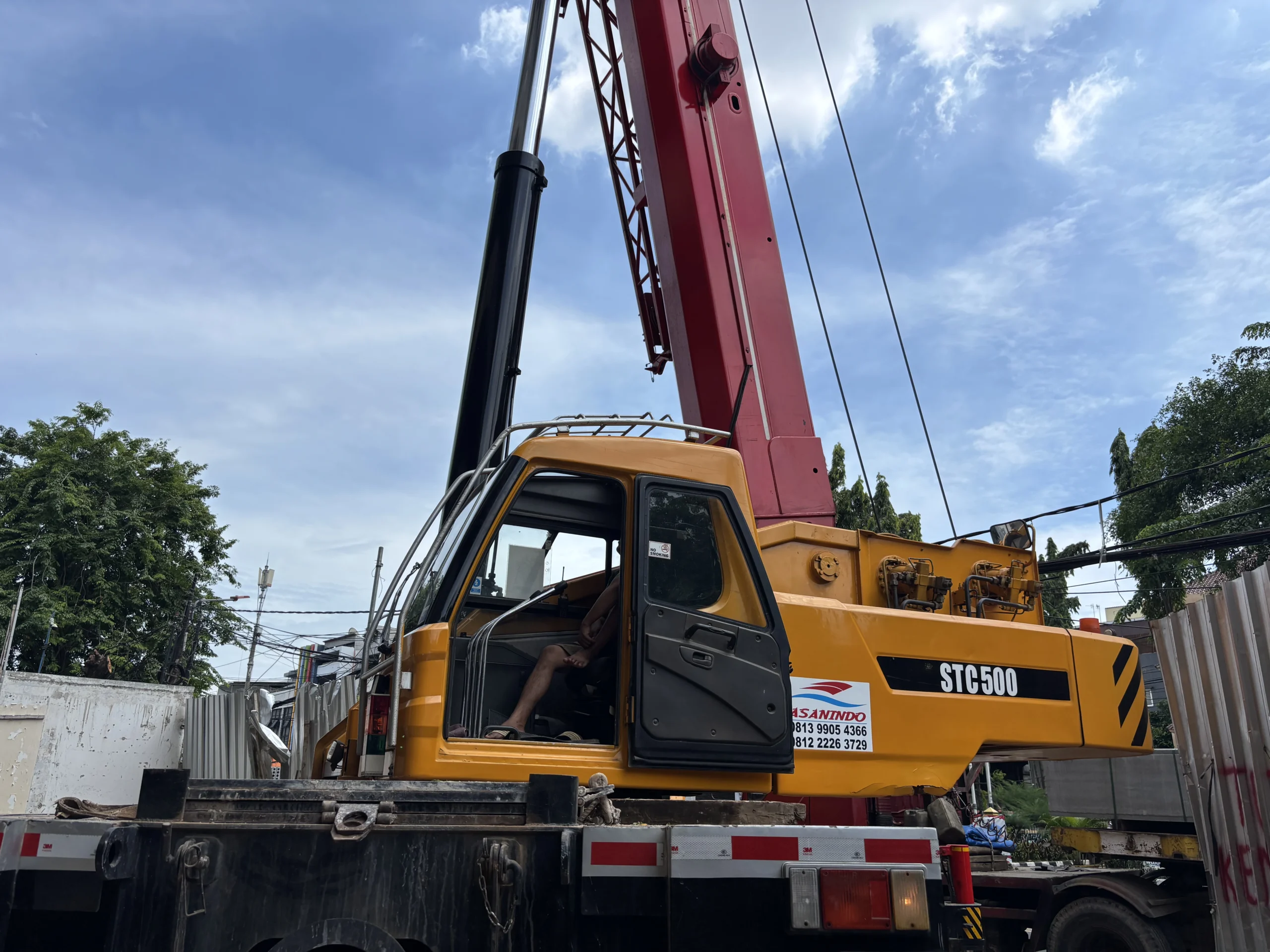
Rentalcranejabodetabek.com provide services Port crane and ship crane rental specifically designed to meet the operational demands of complex port environments. We have extensive experience working in international standard port areas, including JICT (Jakarta International Container Terminal) — with fully certified units, an experienced team, and round-the-clock response.
Why do crane operations at ports differ from those on typical construction projects?
Many crane companies can serve normal construction projects. But not all can enter and operate in port areas — especially international standard ports like JICT. There are several things that make the port environment much more demanding from conventional projects:
Strict Regulations and Certifications
Entering the international port area is not something that can be done carelessly. Every crane unit and every operator must have complete, valid certifications—including Operator License Dan Operating Worthiness Permit (SILO) which is recognized by the port authority. Without this document, your crane will not be allowed entry, no matter how small the job is.
Extreme Time Pressure
At the port, schedules are law. Ships have tight berthing windows. Delays in loading and unloading operations can trigger substantial daily demurrage costs. The cranes and operators you use must be able to work quickly, accurately, and without unnecessary downtime.
Challenging Environmental Conditions
Harbor environments have unique characteristics: stronger-than-average sea breezes, busy work areas with logistics activities from various directions, quay surfaces that require special attention for outrigger positioning, and simultaneous coordination with multiple parties — ship operators, port authorities, stevedores, and cargo managers.
Higher Risk
Working on a dock, alongside a ship's hull, or in areas with heavy machinery activity carries a higher risk profile than conventional projects. It requires operators who are not only technically trained but also experienced in reading the specific conditions of a port environment.
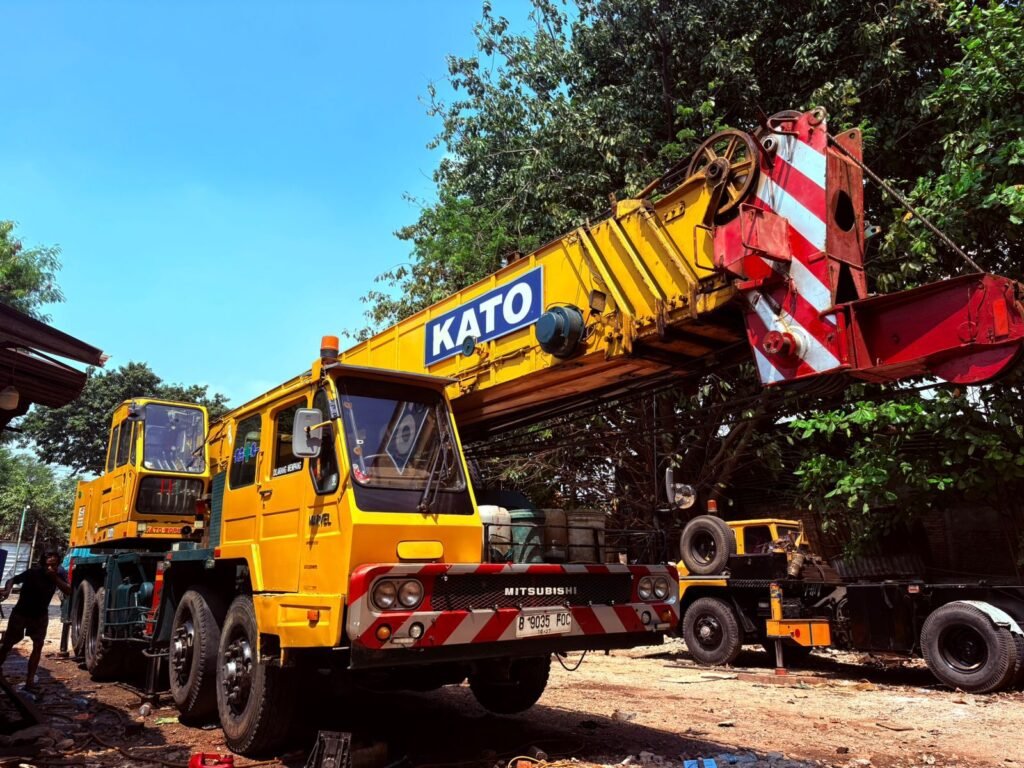
Port Crane Services We Provide
The need for cranes in a port environment is far more diverse than often imagined. Here are the types of jobs we routinely handle:
⚓ 1. Cargo Loading and Unloading in the Port Area
This is the most common and critical job in a port environment. Our cranes are used to move various types of cargo—from break bulk, industrial machinery and equipment, to large project cargo components—from ships to the dock, and vice versa.
Speed, precision, and safety are three non-negotiable aspects. Our experienced port operators understand this not from theory, but from real-world experience.
⚓ 2. Direct Ship-to-Shore Loading and Unloading
One of the operations that requires the most specialized expertise is direct lifting from a ship's cargo hold to the quay. This job requires the crane operator to work at varying radii and heights, depending on tidal conditions and the type of vessel berthed.
Our operators are trained to work in these conditions — understanding vessel movement dynamics, anticipating the effects of sea breezes on suspended loads, and coordinating effectively with the vessel's crew and the stevedores on deck.
3. Port Equipment Repair and Maintenance
Port equipment — including quay crane/gantry crane, RTG cranes, large conveyors, and other dock infrastructure require regular maintenance and component replacement. Maintenance work on this large equipment often requires the assistance of additional cranes (assist cranes) to lift heavy components.
We have experience providing support crane for repair of tango crane and other port equipment — work that requires high precision because it is carried out within the operational area of an active port.
4. Loading and Unloading in the Port Warehouse Area
Logistics activities don't stop at the docks. In the warehousing area within or around the port premises, cranes are also needed to move heavy cargo that cannot be handled by ordinary forklifts. We cater to the crane needs for port warehousing operations, including the movement of machinery, heavy equipment, and project cargo that requires special handling.
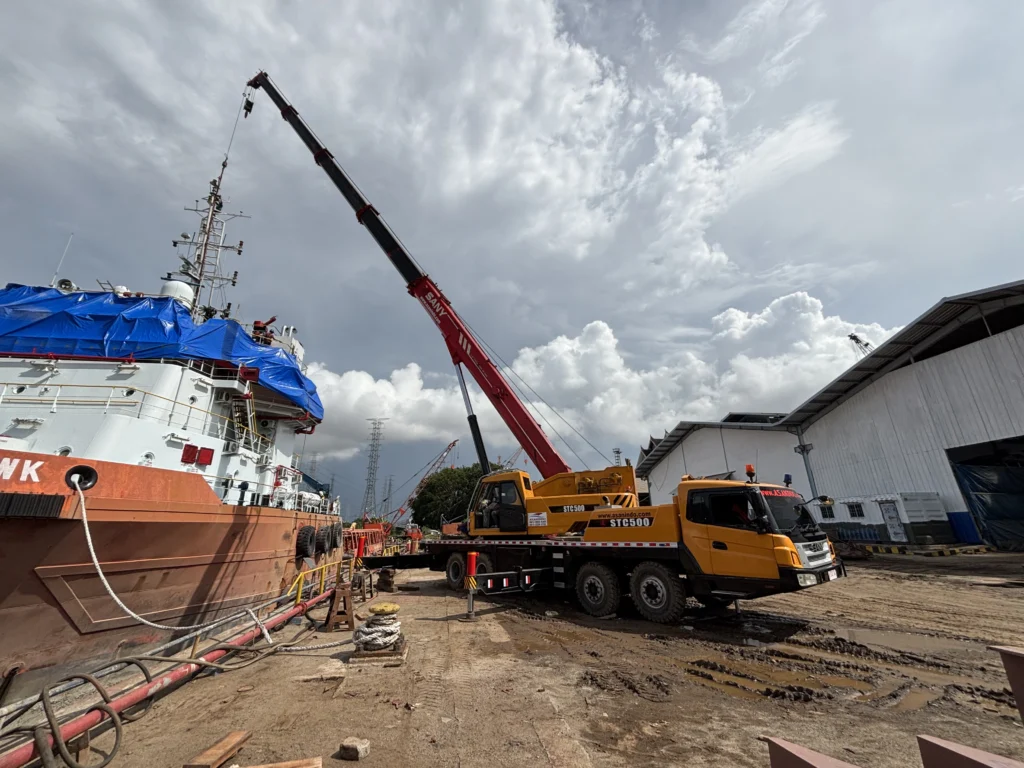
Our Experience at JICT – International Port Standards
This is the part that really sets us apart from most crane providers in Jabodetabek.
Jakarta International Container Terminal (JICT) is one of the largest and busiest container terminals in Indonesia, managed to world-class operational standards. Entering and operating within the JICT area is not easy — certification requirements, safety standards, and operational procedures there are on par with the best international port standards.
We are proud to state that Our crane units and operators have met all the requirements to operate in the JICT area., including:
- ✅ Operator License that is valid for all our operators
- ✅ Operating Worthiness Permit (SILO) the complete and still valid for each unit
- ✅ Understanding of safety procedures and standard operating protocols for international ports
- ✅ Track record of actual work in the JICT area and related port facilities
When you choose Rentalcranejabodetabek.com For port crane needs, you choose a partner who is already proven capable of working in even the most demanding environments — not a vendor trying to enter the port area for the first time.
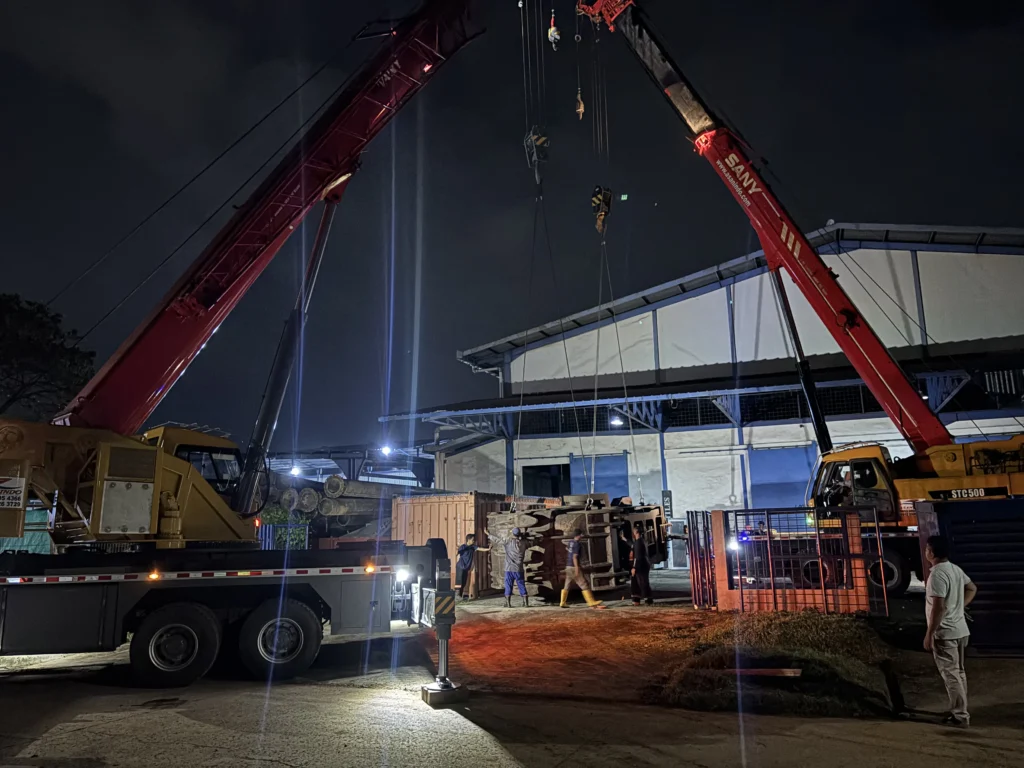
Understanding SIO and SILO: Why These Documents Are Crucial at Ports
If you haven't worked in a port environment before, this section is crucial to understand. Not just any crane and operator can enter and work in an international port area.
SIO — Operator Permit
SIO is an official license issued by the Indonesian Ministry of Manpower that proves a crane operator has been tested for competency and deemed fit to operate a crane. In port areas, a valid SIO is a non-negotiable minimum requirement.
OPERATING PERMIT - Surat Izin Laik Operasi
SILO is a document that proves that a crane unit—not its operator, but the tool itself — has been technically inspected and declared fit for operation. In a high-standard port area like JICT, units without a valid SILO will not be allowed entry. Period.
What are the risks if the crane vendor doesn't have complete documentation?
If you rent a crane from a vendor who does not have complete SIO and SILO, there are two major risks that directly threaten:
- The crane cannot enter the port area. — all plans and schedules are messed up before the work even starts
- Legal liability if an incident occurs — because work was performed without proper authorization
With Rentalcranejabodetabek.com, You don't need to worry about this. Our documents are complete, valid, and ready to be shown to port authorities whenever necessary.
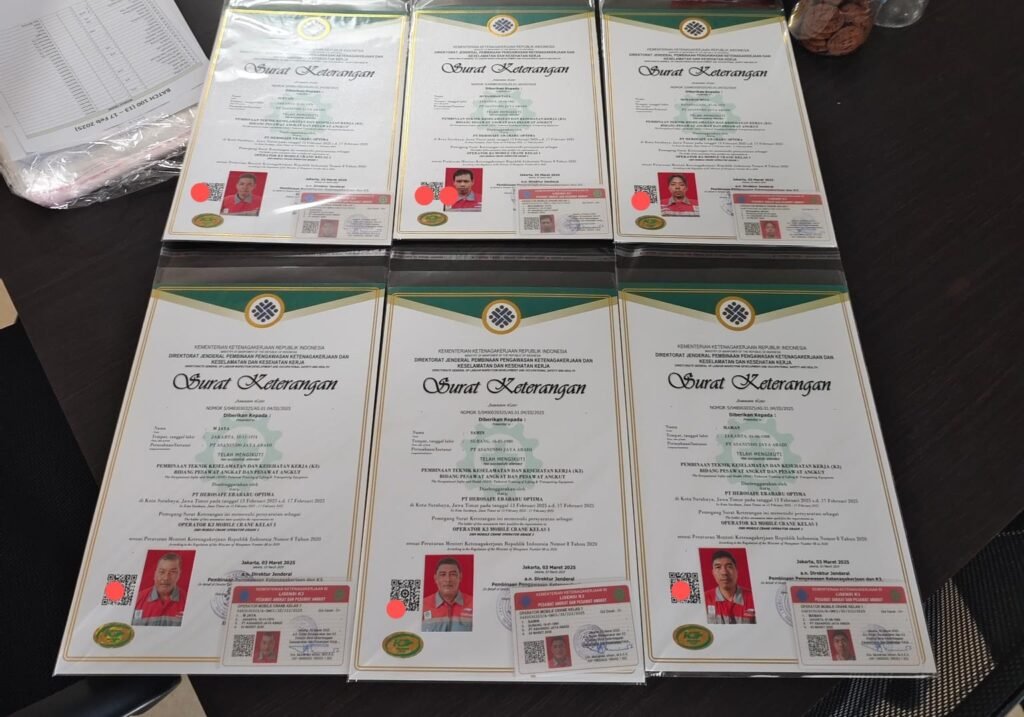
Why Port Downtime is Much More Expensive Than You Think
In the port and logistics industry, there's one word that makes every operations manager break out in a cold sweat: downtime.
Port downtime is more than just delayed work. Every hour of delay triggers a domino effect:
- Demurrage charges Ships that are late departing the pier due to unfinished operations are subject to large daily fines.
- Detention costs — containers returned late to the shipping line are also subject to daily charges
- Supply chain disruption A delay at one point impacts the entire distribution chain
- Contractual penalty — many logistics contracts have penalty clauses for late delivery
That's why we are very serious about this. Unit readiness and rapid response. A crane that has problems during operation isn't just an inconvenience—it's a real financial loss that's immediately felt on your balance sheet.
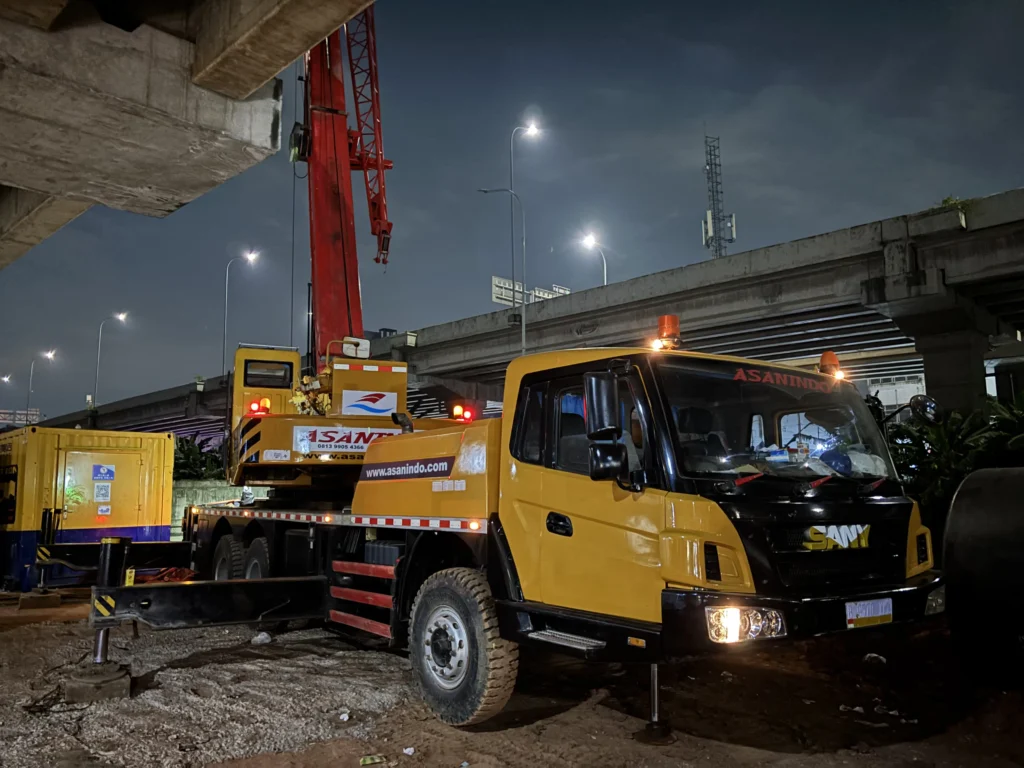
Advantages of Our Port Crane Services
✅ Complete SIO and SILO — Ready to Enter International Port Area Our units and operators have all the necessary certifications to operate in high-standard port areas, including JICT. There is no risk of denial at the entrance due to incomplete documentation.
✅ Real-world experience in a port environment We are not newcomers to the port area. Our team has handled various types of work—from standard cargo loading and unloading to technical jobs like crane assistance for tango crane repairs.
✅ 24/7 Response and Support Port operations do not stop when the sun sets. We are available 24 hours a day, 7 days a week — including Sundays and national holidays.
✅ High-Performance Unit, Well-Maintained, Ready for Operation Every unit sent to the port area undergoes a technical inspection before assignment. We do not risk sending units in questionable condition to an operational environment that has no tolerance for damage.
✅ Professional Coordination with the Port Ecosystem Our team understands how to coordinate with port authorities, stevedores, ship agents, and other relevant parties. You don't need to worry about the technical coordination on the ground — we'll handle it.
✅ Transparent Pricing, Written Offers Every offer is made in writing and in detail. There are no hidden costs, no surprises at the end of the job.
[PHOTO 6]
Filename: port-crane-team-coordination-dock-stevedore.jpg Alt Text: Crane operators and stevedores coordinate before loading and unloading operations at the Jakarta port dock. Caption: Good coordination between crane operators, stevedores, and the port team is key to safe and efficient loading and unloading operations. Photo Directions: Photo of the team coordinating in the pier area — morning briefing before operations, or coordination between operators using hand signals/radio. Full PPE must be visible.
Types of Cargo We Handle
Our experience in the port environment includes handling various types of cargo:
- Break bulk cargo — bulk, pipes, wood, and other non-containerized cargo
- Project cargo — large machine components, plant modules, heavy industrial equipment requiring special handling
- Heavy lift cargo — cargo with a weight exceeding the capacity of standard port loading and unloading equipment
- Out-of-gauge cargo (OOG) freight exceeding standard container dimensions
- Construction and industrial equipment heavy equipment, generators, transformers, infrastructure components
- Port equipment components spare parts and components for the repair of port equipment itself
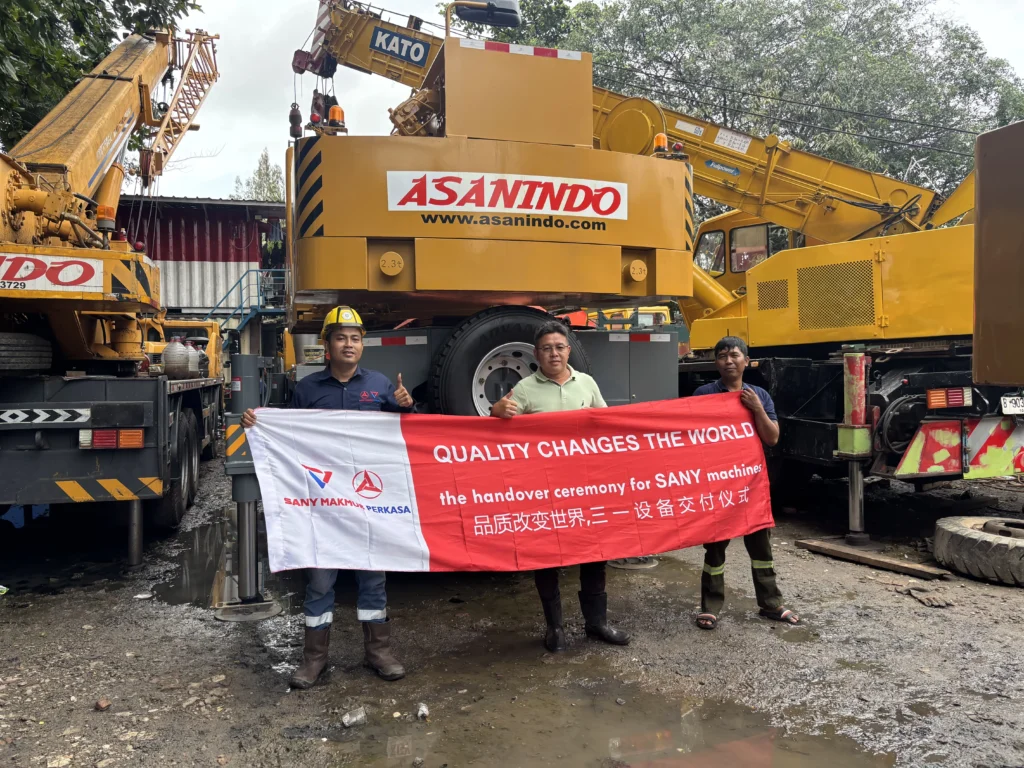
FAQ: Frequently Asked Questions About Port Crane Rental
Yes. Our units and operators possess complete and valid SIO and SILO, and have extensive experience operating within the JICT area. We understand the entry procedures, safety protocols, and operational methods in place there. Leave the matter of permits and access to us.
Sure. We absolutely understand that crane needs at the port often arise suddenly—ship schedules change, equipment breaks down, or cargo arrives ahead of schedule. Our team is available 24 hours / 7 days to respond as quickly as possible, including outside of normal working hours.
SILO (Surat Izin Laik Operasi - Certificate of Operational Worthiness) is an official document stating that a crane unit has undergone a technical inspection and has been deemed fit for operation. In internationally standardized port areas like JICT, units without a valid SILO are not allowed entry at all – no matter how visually good the equipment's condition may be. All our units assigned to port areas possess valid SILOs and are ready to be presented to the authorities at any time.
A: Our fleet available from capacity 8 tons until 55 tons. For specific needs requiring capacity beyond this range, please discuss with our team – we will help find the best solution. See also full list of our fleet and rates.
Yes, this is one of the services we've been providing and we have experience in it. We provide assist cranes for the repair and maintenance of port equipment, including tango/quay cranes. This type of work requires very careful coordination and truly experienced operators—and we have both.
Contact Us - 24-Hour Port Crane Support
Port operations don't have downtime, and neither does our team. Whatever your crane needs are in the port environment — routine loading and unloading, equipment repairs, project cargo, or sudden emergency needs — Rentalcranejabodetabek.com ready to attend with the right unit, experienced operator, and complete documents.
📞 WhatsApp / Phone (Fast Respon 24 Hours):
0813-8080-1729
(Davin Aubade)
🌐 Website: www.rentalcranejabodetabek.com
“Contact us now for a consultation on your port crane needs. We're ready to respond quickly – because we know, in the world of ports, every minute counts.”
Other Services You Might Need:
- 🔗 Crane Rental 5 Ton — for work in confined spaces
- 🔗 Crane Rental 25 Ton — intermediate equipment installation
- 🔗 Crane Rental 30 Ton — most popular choices for construction
- 🔗 Crane Rental 55 Ton (SANY STC550C5) — large-scale heavy lifting specialist
- 🔗 Mobile Crane & Truck Crane Rental — flexible crane without trailer
- 🔗 Crane Rental Price List — all our rental rates
- 🔗 Contact Us — live consultation with our team of experts