



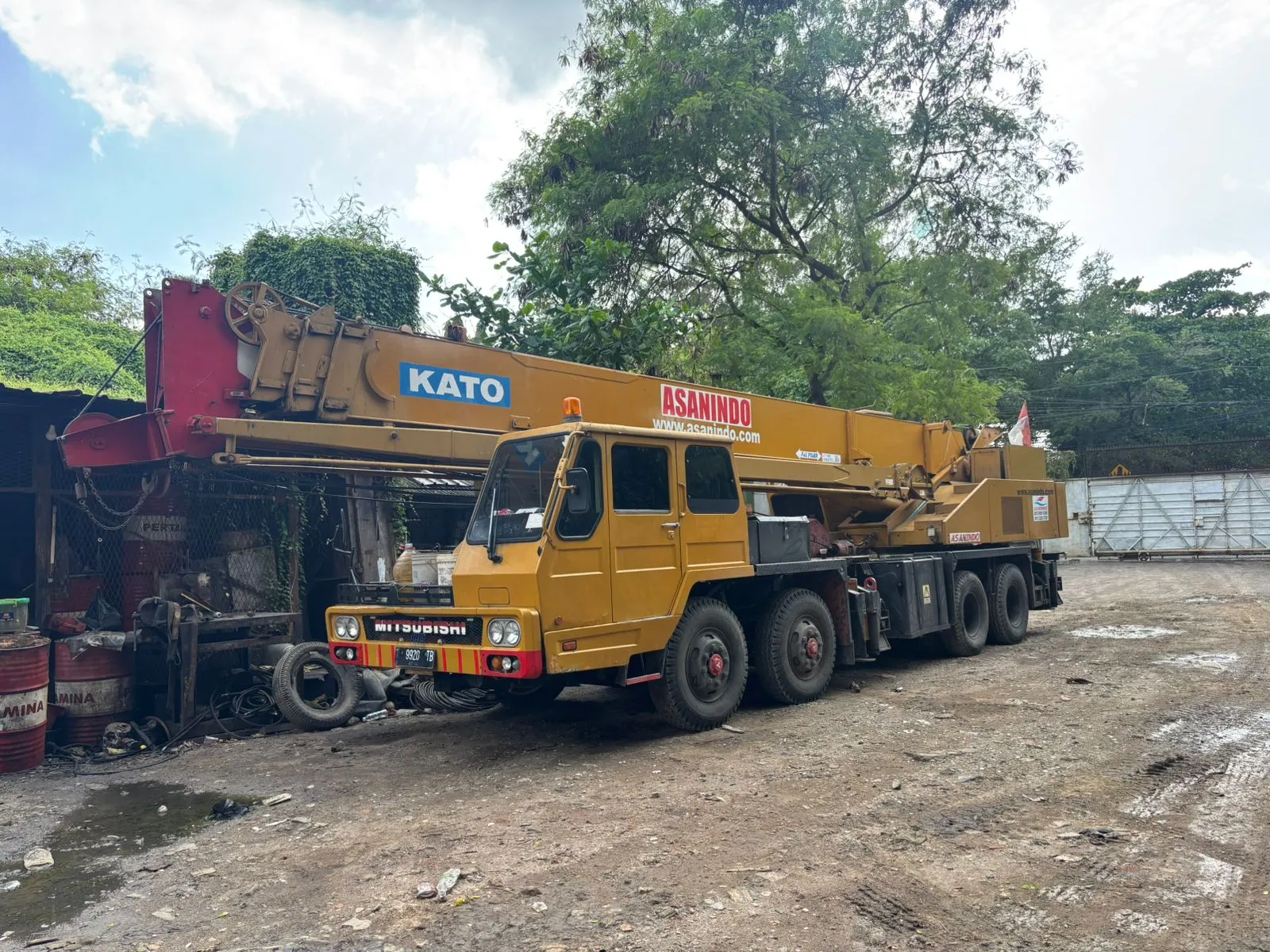
This question comes up almost every time someone is looking to rent a crane for the first time—or even for experienced contractors wanting to ensure they’re selecting the most efficient rental system for a specific project.
“Which is more economical, renting a crane daily or entering into a monthly contract?”
The answer isn't a vague “it depends.” There are quantifiable numbers, determinable tipping points, and clear logic that dictates when one system is far more advantageous than another.
This article will guide you to understand Two crane rental systems that applies in Indonesia, how to calculate the actual cost of each system, and practical guidance on when to choose which — complete with real calculation examples using a 25-ton crane.
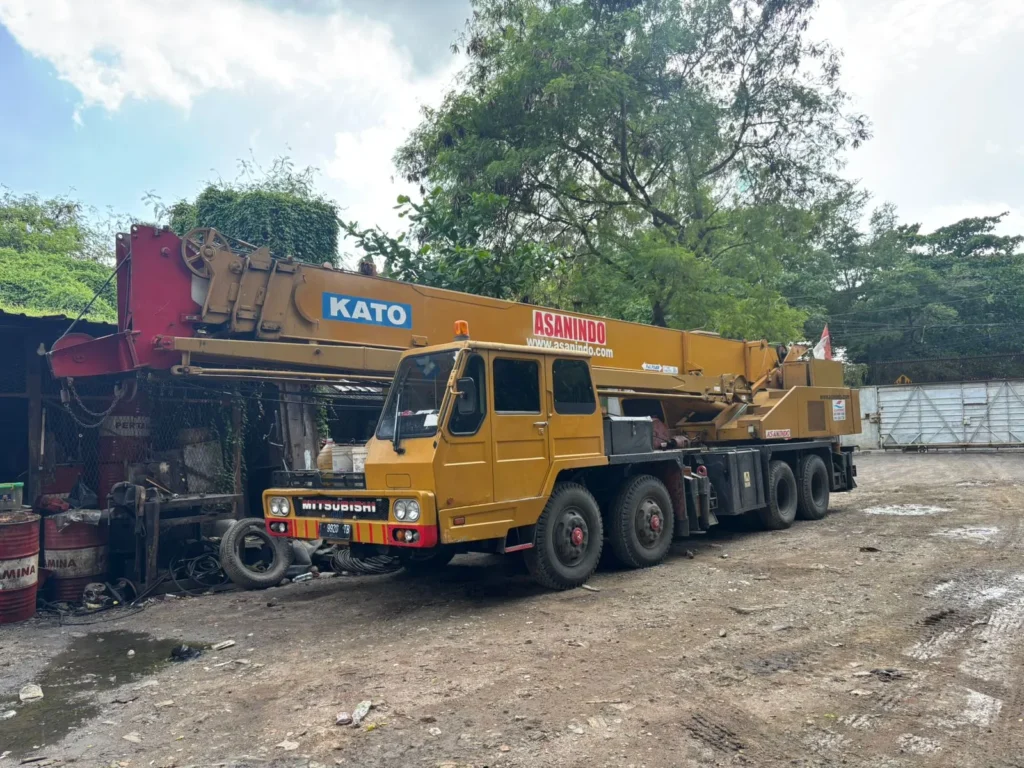
Understanding Two Crane Rental Systems in Indonesia
Before comparing costs, it's important to first understand how each system works technically — because the differences aren't just about price, but also about What is included in the package, how is overtime calculated, and what are the obligations of each party.
System 1: Rent Per Shift (Daily)
The shift system is the most common and flexible rental method. You pay per shift unit used.
Definition 1 Shift
1 shift = 7 hours of work + 1 hour of break = 8 hours total
The countdown has begun. since the crane unit arrived at your project site — not from when the crane departs from the fleet pool. This is important: the crane's travel time to the site does not count towards your shift hours.
How is overtime calculated in shift systems?
This is a detail that is often misunderstood, and it is very important to know before you plan your work schedule:
Overtime calculation for
Overtime cost = Rental price ÷ 7 hours × number of overtime hoursThe meaning is, the hourly rate for overtime is shifted price divided by 7.
Example for a 25-ton crane (Rp 4,800,000/shift):
- Hourly overtime rate = Rp 4,800,000 ÷ 7 = ±Rp 686,000/hour
Important rules: If overtime exceeds 4 hours in a day, then the overtime is counted as 1 full shift— not hourly anymore.
This means if you work 11 hours in a day (7 normal work hours + 4 overtime hours), you pay 1.5 shift. If working more than 11 hours, it is most likely more efficient to calculate it as 2 full shifts.
What is included in a per-shift rental?
In our shift rental system, the price already all-inclusive:
✅ Certified SIO crane operator ✅ Fuel (diesel) for all operational hours per shift ✅ Operator meal allowance ✅ Operator travel allowance ✅ Mobilization & demobilization to all Jabodetabek areas
There are no hidden fees — the price you see is the price you pay.
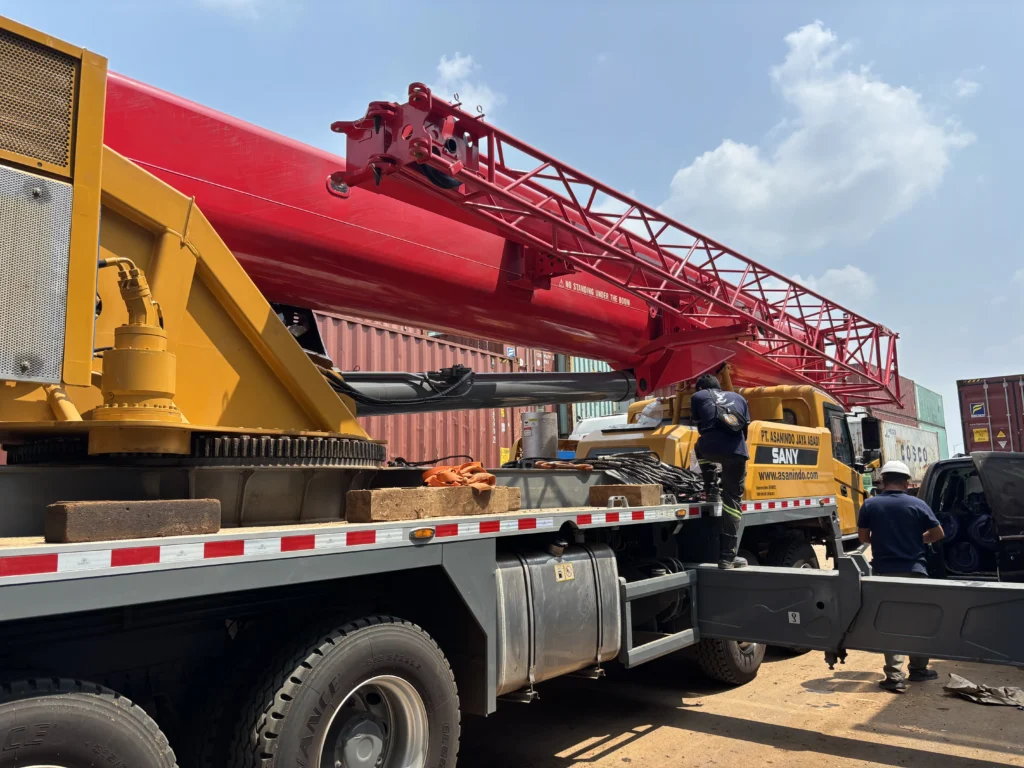
System 2: Lease Agreement (Per 100 Hours or 200 Hours)
The contract system is an option for projects that require cranes for longer and more planned durations.
Two Contract Package Options
100-Hour Package:
- Equivalent to 12.5 business days @ 8 hours/day (About half a month)
- Suitable for projects with a duration of approximately 2–3 weeks
200-Hour Package:
- Equivalent to 25 business days @ 8 hours/day (about one calendar month)
- Suitable for medium-term construction projects that require a crane almost daily.
Unique Advantage of Contract System: Overtime Not Counted Separately
This is one of the most significant, often unrecognized, advantages of a contract system:
In a contract system, there is no separate overtime pay. Every hour you work — whether it's regular hours or overtime — simply deducts from the total contracted hours you have available.
Meaning:
- If you work 10 hours in one day, the contract package is reduced by 10 hours.
- If you work 6 hours on other days, the package is reduced by 6 hours.
- No surcharge, no “extra shift” charges”
This offers tremendous flexibility to adjust crane working hours to real site conditions — without worrying about ballooning overtime costs.
Differences in Cost Components in Contract Systems
Unlike all-inclusive shift systems, in contract systems there are several components that are generally not included in the contract price and to be the responsibility of the tenant:
❌ BBM is not included The tenant provides their own solar power. (estimated consumption: ±40 liters/day for a 25-ton crane)
❌ Meal allowances for operators are not included — becomes the tenant's responsibility
📝 Important notes: The above provisions are standard terms for a contract system. However, everything negotiable. Some clients prefer an all-inclusive contract price (fuel and meals included with price adjustments), while others prefer a separate component system for more granular cost control. Discuss with our team to find the structure that best suits your project needs.
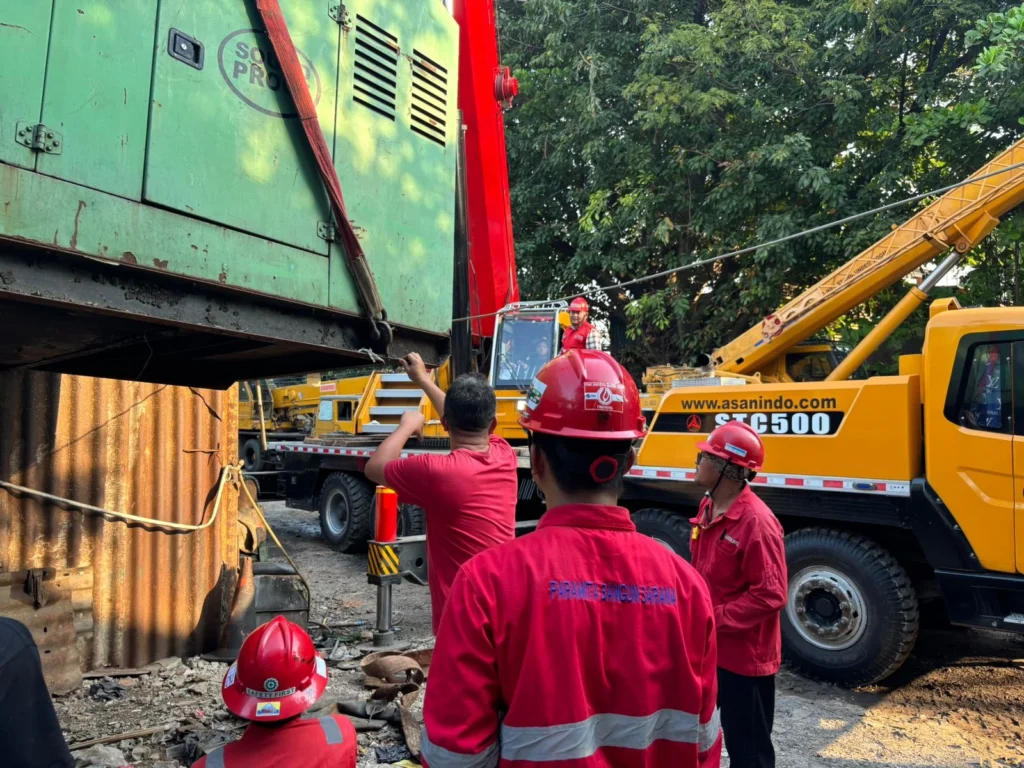
Direct Comparison: 25-Ton Crane — Daily vs. Monthly
Let's get into the real numbers. This is a real calculation example using 25-ton crane — one of the most popular units in our fleet.
25 Ton Crane Rate, Daily System (Per Shift)
Price: Rp 4,800,000/shift
What's included:
- ✅ Certified SIO Operator
- ✅ BBM (solar)
- ✅ Operator meal allowance
- ✅ Operator travel money
- ✅ Mobilization & Demobilization (Jabodetabek Area)
All costs are included in a single figure—there are no components that need to be added up separately.
25 Ton Crane Rate - 200 Hour Contract System (Monthly)
Price: Rp 50,000,000 / 200 working hours / 25 working days
Included:
- ✅ Certified SIO Operator
- ✅ Operator travel money
Not included (tenant's responsibility):
- BBM solar. (estimated ±40 liters/day × Rp 6,800/liter = ±Rp 272,000/day)
- ❌ Operator meal money (Estimate ±Rp 50,000–75,000/day)
Estimated additional cost per day: ±Rp 322,000–347,000 Estimated additional costs for 25 days: ±Rp 8,050,000–8,675,000
Cost Comparison Simulation — 25 Days of Use
| Cost Components | Daily System (25 shifts) | 200-Hour Contract System |
|---|---|---|
| Base rent | Rp 120,000,000 120,000,000 Indonesian Rupiah | IDR 50,000,000 |
| BBM | ✅ Included | Approx. Rp 6,800,000 (25 days) |
| Operator meal allowance | ✅ Included | ±IDR 1,750,000 (25 days) |
| Travel money | ✅ Included | ✅ Included |
| Mobilization | ✅ Included | ✅ Included |
| Total Estimate | 120,000,000 Indonesian Rupiah | ±Rp 58,550,000 |
| Difference | — | Save ±Rp 61,450,000 |
💡 Conclusion: For 25 working days (equivalent to 1 month) of use, a 200-hour contract system can save approximately IDR 61 million compared to daily rental —.
Breakeven Point: When are Contracts Cheaper Than Daily?
A more practical question is: What is the minimum number of days of use for the contract system to start becoming more profitable?
Assuming additional costs (fuel + food) of approximately IDR 350,000/day within the contract system:
200-hour contract cost = Rp 50,000,000 + (Rp 350,000 × working days)
Daily cost = Rp 4,800,000 x working days
Break-even point
$50,000,000 + ($350,000 × X) = $4,800,000 × X
$50,000,000 = ($4,800,000 - $350,000) × X
$50,000,000 = $4,450,000 × X
X = 50,000,000 ÷ 4,450,000
X ≈ 11.2 days
Starting from the 12th day, the 200-hour contract system is more cost-effective than daily rentals.
This aligns with practical guide that we recommend to clients:
🔑 Use daily rental if the crane requirement is less than 10 days. 🔑 Use a contract system if crane needs are 10 days or more.
Comprehensive Comparison: All Aspects of Daily vs. Contract
| Aspect | Daily Rental (Per Shift) | Contract (100/200 Hours) |
|---|---|---|
| Unit of time | Per shift (7-hour workday) | Per hour (total 100/200 hours) |
| Price of a 25-ton crane | Rp 4,800,000/shift | IDR 50,000,000 / 200 hours |
| BBM | ✅ Included | Tenant's liability |
| Operator meal allowance | ✅ Included | Tenant's liability |
| Overtime | Calculated per hour (>4 hours = 1 shift) | Not counted separately — only deduct from the hour balance |
| Schedule flexibility | Limited to booked shifts | Very flexible — scheduling can be adjusted according to field conditions |
| Initial commitment | None — pay per shift | Total commitment to hours at the start |
| Most economical for | Use < 10 days | Use ≥ 10–12 days |
| Suitable for | Short-term, sudden, uncertain work | Project with a planned schedule and clear duration |
When to Choose Daily Rental?
Daily rental is the right choice when:
✅ Crane hire duration under 10 days This is the simplest guide. If you only need a crane for a few shifts or days, daily rental is much more flexible and doesn't require a contract commitment.
✅ The job is a one-time or non-recurring task. The installation of a single machine unit, quick renovations that can be completed in 1-2 days, or emergency work that cannot be planned far in advance — all of these are better suited for a daily system.
✅ Project schedule is not certain or subject to change If there is great uncertainty in the schedule (depending on weather, material availability, or approvals) and there is a risk that the crane might be unused for days on end, a daily system gives you the freedom to only pay when the crane is actually needed.
✅ Rush order or urgent needs The sudden need for cranes in emergency situations — factory machinery breakdowns, unexpected loading and unloading, equipment evacuation — is almost always handled by a shift system.
When to Choose a Contract?
The contract system is the right choice when:
✅ Crane rental duration of 10 days or more Starting from about 10–12 days of use, the savings from the contract system are already greater than the additional fuel and meal expenses you are responsible for.
✅ Construction project with a planned schedule Building, fabrication, or infrastructure projects that require a crane almost daily for several weeks are perfect candidates for the 200-hour package.
✅ You want overtime flexibility at no extra cost Since overtime is not counted separately in the contract system, you can work 10 hours on a productive day without worrying about escalating overtime charges.
Project budgets need to be confirmed from the start With a contract system, the total rental cost is much easier to estimate and control — you know from the beginning what budget to allocate for the crane.
✅ You can provide your own fuel more efficiently Some clients with access to subsidized solar or cheaper fuel prices actually benefit more from a contract system where they manage their own fuel.
Practical Tips for Optimizing Crane Rental Budgets
Whatever system you choose, here are some tips from our experience serving hundreds of projects in Jabodetabek:
Calculate the total days of need first before deciding on a system. Don't order per shift just because “it's the most common.” Estimate the total working days you'll need the crane for, then compare the total costs of both systems before deciding.
In daily systems, prepare the location before the crane arrives. Every minute the crane waits because the location isn't ready is a minute that counts towards the shift. Ensure materials, access, and the team are ready. before The crane has arrived.
In a contract system, take advantage of overtime flexibility. Since overtime isn't counted separately, days where work is very productive can be used to catch up on the schedule — working 10–11 hours at no extra cost.
Schedule multiple jobs on the same day Especially in daily systems, if there are several small tasks that can be done in one day, schedule them all in one shift for maximum cost efficiency.
Consider the total cost, not just the rental price When comparing vendors, don't just compare rental prices. Compare the total cost, including fuel, mobilization, and other components that may differ from one vendor to another.
FAQ: Frequently Asked Questions About Crane Rental Systems
A: Can the contract price be negotiated? Yes. The contract prices listed here are reference estimates. The final price depends on several factors: the required crane capacity, contract duration (100 hours vs. 200 hours), project location, and negotiations between both parties. Components such as fuel and meal allowances being included or excluded from the contract price can also be discussed and adjusted. Contact us to get a contract offer tailored to your specific project needs.
What happens if the contract hours balance runs out before the project is completed? If 200 hours have been used before the project is finished, you can extend the contract or switch to a shift-based system for the remaining work. Our team will monitor the hour balance and inform you well before the balance runs out so that there are no operational disruptions.
Can the remaining contract hours be carried over to the next project? Contract hours balances generally apply to the agreed-upon contract period and for the same project. For different arrangements—for example, using remaining hours for another project or at a different location—this needs to be discussed and agreed upon in writing in a contract addendum.
What if the crane cannot be used for several days within the contract period (e.g., due to weather or site conditions)? Days when the crane is not operating do not reduce the contract hour balance — only the actual hours used are deducted. This is another advantage of a contract system: you don't “lose” contract days if there are disruptions beyond your control.
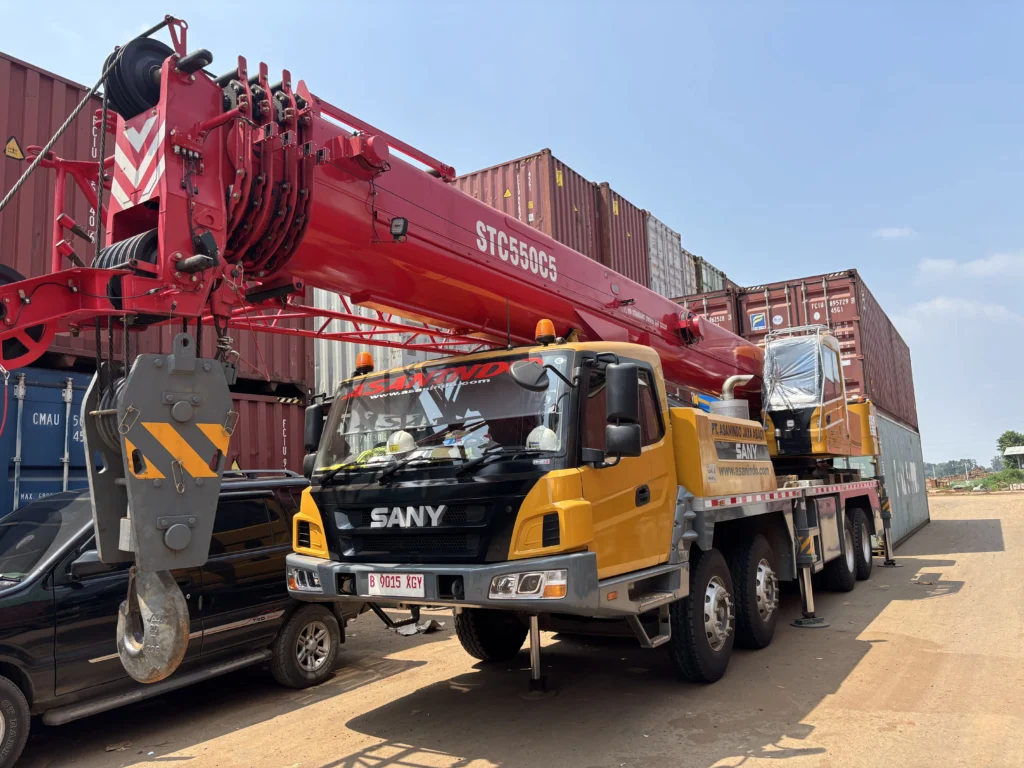
Q: Is there a contract system for all crane capacities? A: Contractual systems are available for all capacities in our fleet — from 8-ton crane until SANY STC550C5 55-ton crane. Contract prices vary by capacity; please contact our team for a contract price estimate based on your required capacity.
A: For my project that needs a crane for 15 days, would a contract system be more economical? Based on the simulation calculation above, yes – for 15 days of use, the savings from the contract system are already very significant. However, for accurate figures, contact us with your project details (required crane capacity, estimated working hours per day, and location) and we will create a more precise calculation simulation for you.
Contact Us — Free Rental System Consultation
Not sure which system is more economical for your project? Our team will help you calculate and compare the total costs of both systems based on your actual project details — free, with no obligation.
📞 WhatsApp / Phone (Fast Respon 24 Hours):
0813-8080-1729
(Davin Aubade)
🌐 Website: www.rentalcranejabodetabek.com
“Tell us the duration and requirements of your project. We'll calculate which is more cost-effective between daily rentals and contracts, and provide clear, written quotes for both.”
Related Articles & Services
- 🔗 Crane Rental Price Per Shift — All-inclusive daily rates for all capacities
- 🔗 Crane Rental Price List — all of our rental packages
- 🔗 Crane Rental 25 Ton — IDR 4,800,000/shift
- 🔗 Crane Rental 30 Ton — IDR 5,500,000/shift
- 🔗 Crane Rental 50 Ton — 8,000,000 Indonesian Rupiah/shift
- 🔗 Crane Rental 55 Ton SANY STC550C5 — Rp 8,600,000/shift
- 🔗 Mobile Crane Capacity Guide — how to choose the right tonnage
- 🔗 24-Hour Mobile Crane Rental Near You — Quick response for urgent needs
- 🔗 Contact Us — consultation and quote