



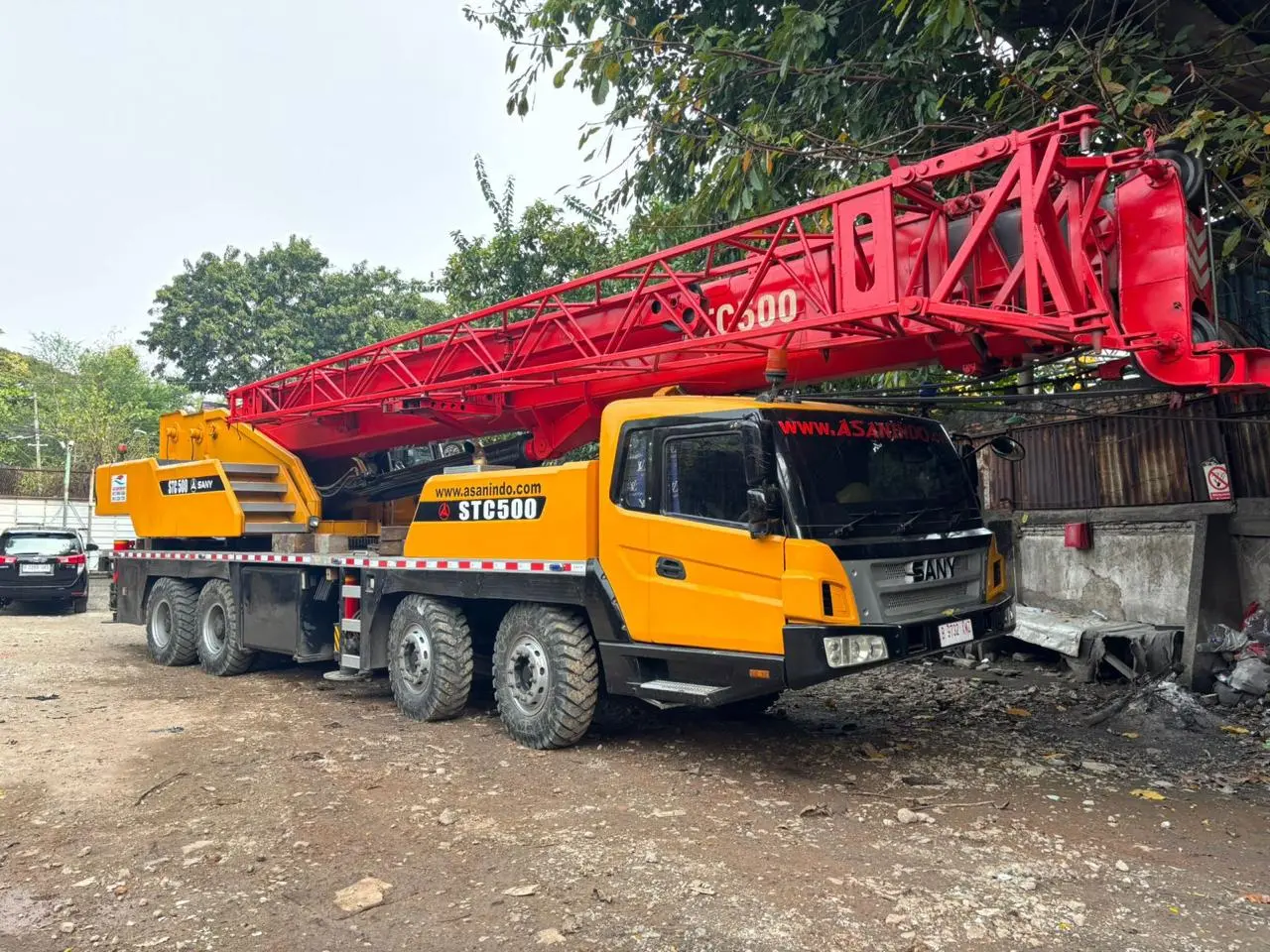
A simple question that lies behind many calls to crane vendors:
“I need a crane to lift a 15-ton machine. What tonnage crane should I order?”
The answer isn't “15-ton crane” — and this is what causes many people to order incorrectly.
Choosing crane capacity is not just about matching the load weight number with the number in the crane's name. There are important technical factors that must be taken into account: working radius, boom length, outrigger configuration, and many other variables that determine how many tons a crane can actually lift safely in actual field conditions.
Choosing the wrong capacity can mean two equally bad things: a crane too small so the work cannot be completed and is potentially dangerous, or the crane too big so you pay more than you need to.
This guide is here to help you make informed decisions — with easy-to-understand technical explanations, practical reference tables, and capacity guidelines for each job category.
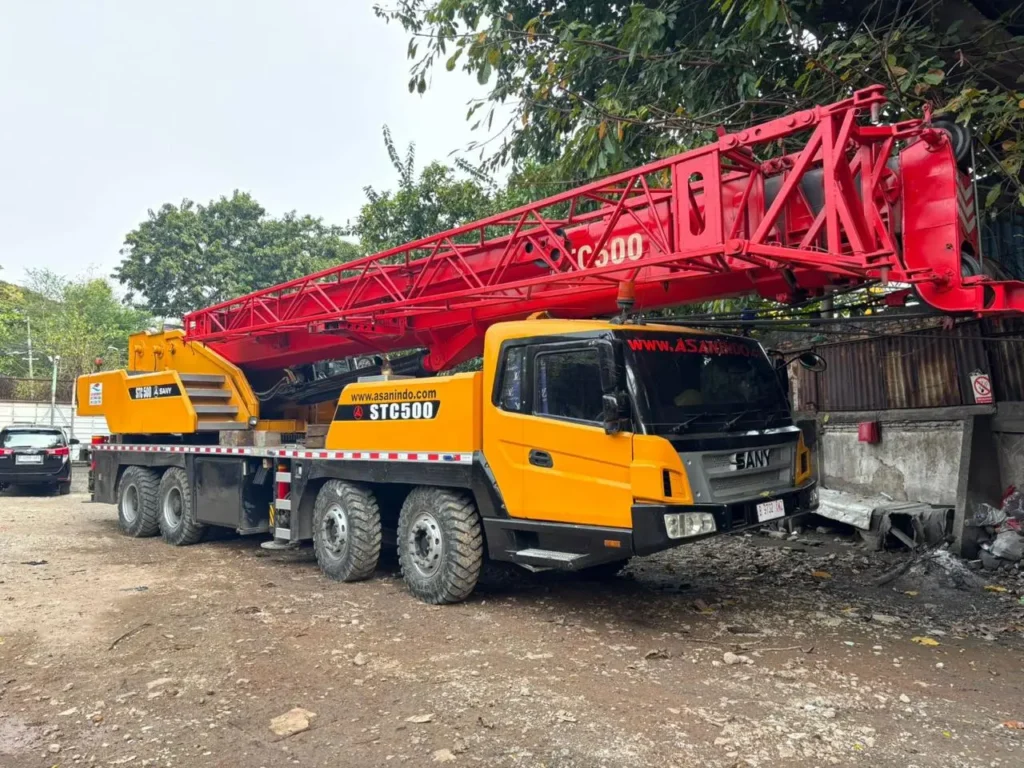
Fundamental Concepts You Must Understand: Nominal Capacity vs. Effective Capacity
Before we get into the selection guide, there's one fundamental concept that obligatory Understood, so that there are no errors in planning:
Nominal Capacity ≠ Effective Capacity
Nominal capacity is the number listed in the crane's name—for example, “30-ton crane.” This is the capacity absolute maximum that can be lifted under the most advantageous conditions: minimum radius (load very close to the crane's body), shortest boom, outriggers fully extended, on a level and solid surface.
Effective capacity is how many tons Indeed, you can lift it. in your actual project conditions — with a specific working radius, the required boom length, and existing site conditions.
Effective capacity is always less than nominal capacity.
And how big the drop depends on the working radius:
| Working radius | Estimated Effective Capacity |
|---|---|
| Minimum radius (3–4 m) | Approaching nominal capacity (80–95%) |
| Medium radius (8–12 m) | Approximately 40–60% of the nominal capacity |
| Long range (15–20 m) | Approximately 20–351 TP3T of the nominal capacity |
| Maximum radius | Can drop to 10–15% of nominal capacity |
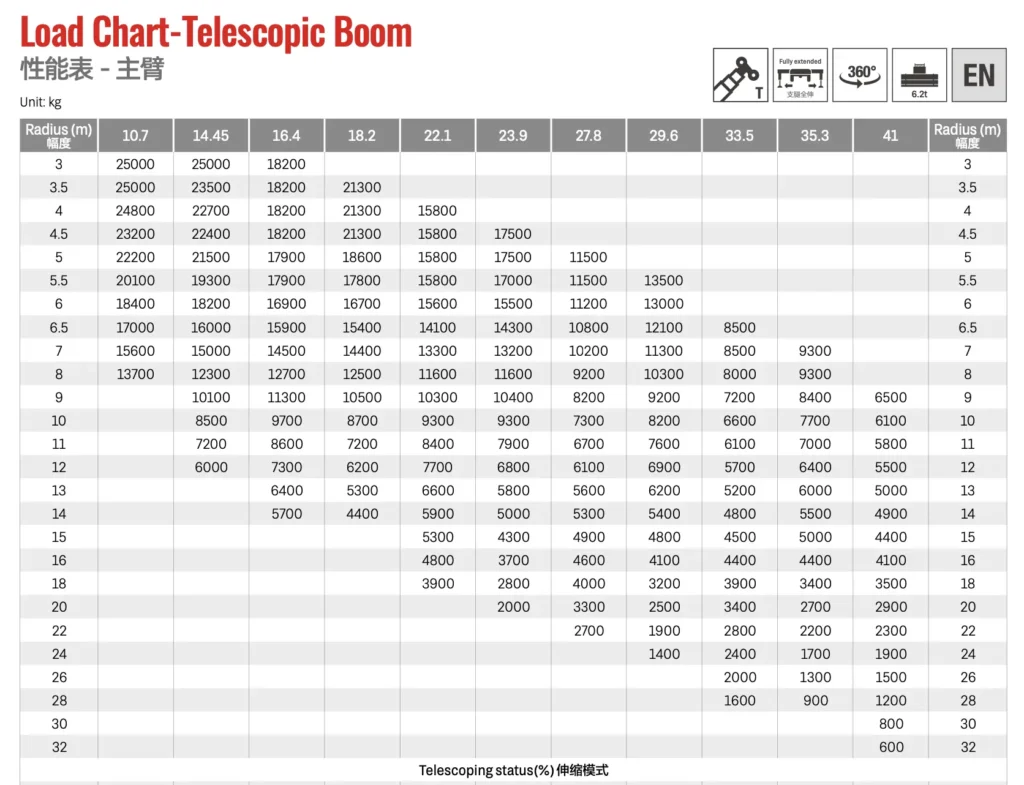
⚠️ The figures above are general estimates. Actual capacity at each radius varies depending on the specific crane model and configuration. Always use Load chart official from the crane manufacturer for accurate and safe lifting planning.
Simple Formula for Choosing the Right Crane Capacity
Although truly accurate calculations require a load chart and technical analysis, here is simple formula That you can use as a starting point for planning:
Step 1: Calculate Total Lifting Load
Total Load = Load Weight + Rigging Equipment WeightRigging equipment (slings, shackles, spreader bars, and other lashing equipment) has its own weight that must be taken into account. For standard work, add an estimate 220-1100 lb for rigging equipment, depending on the size and type used.
Example:
- The weight of the machine to be lifted: 12,000 kg (12 tons)
- Rigging equipment estimate: 200 kg
- Total lifting load: 12,200 kg (±12.2 tons)
Step 2: Estimate the Required Working Radius
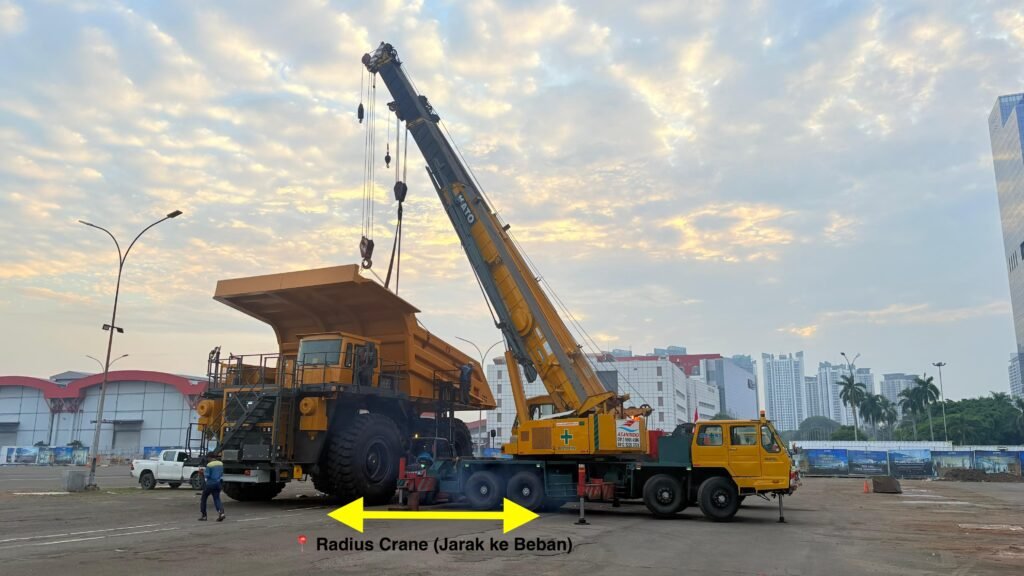
Working radius horizontal distance from the crane's center of rotation (not the edge of the unit) to the point where the load will be hung.
To estimate the required working radius:
- Measure the distance from Possible positions for a standing crane to the lifting point
- Add a distance from the unit edge to the center of rotation (typically 1–2 meters)
- Consider the physical constraints that require the crane to stand farther from the lift point
Step 3: Use Safety Factor
Never order a crane with the capacity Pass with the total load to be lifted. Always add Safety factor — generally At least 251 TP3T above the total load.
Minimum Effective Capacity = Total Load × 1.25Continuing the example:
- Total lifting load: 12.2 tons
- Minimum effective capacity (with a safety factor of 25%): 12.2 × 1.25 = ±15.3 tons
Meaning, you need a crane that Capable of lifting at least 15.3 tons at the working radius you require.
Step 4: Adjust with Load Chart
With the minimum effective capacity and working radius already known, find the crane whose load chart shows the capacity above that number at the required working radius.
If you do not have access to a load chart or are unsure how to read it — Contact our team. We assist with this process free of charge as part of our technical consultation.
Unit Capacity Guide: Which is Right for Your Job?
After understanding the basic concepts, here is a practical guide for each crane capacity available in our fleet:
🔹 8-Ton Mobile Crane — Rp 3,500,000/shift
Nominal capacity: 8 tons Practical effective capacity: 4–6 ton at a medium working radius (5–8 meters) Maximum boom: 22–28 meters
Use an 8-ton crane for:
- Light to medium construction materials (palletized bricks, bulk cement sacks, reinforcing steel)
- Small to medium-sized split AC units or rooftop package units
- Solar panels and their mounting structures
- Standard-sized billboards and signage
- Light steel frame for carports, canopies, or small mezzanines
- Multi-story shop house and house renovation
Do not use an 8-ton crane for:
- Heavy production machinery or industrial equipment weighing over 5–6 tons
- Work requiring a radius of more than 10-12 meters
- Heavy structural components like steel columns or large WF beams
🔹 25 Ton Mobile Crane — Rp 4,800,000/shift
Nominal capacity: 25 tons Practical effective capacity: 10–18 tons at a medium working radius (6–12 meters) Maximum boom: ±48 meters (with jib)
Use a 25-ton crane for:
- Installation of medium-sized factory machinery (5–15 tons)
- Precast wall or floor panels in standard sizes
- Large mechanical-electrical components (MEP) — AHUs, industrial pumps, medium voltage transformer panels
- Erection of light steel and medium-scale mezzanine
- Factory area jobs with medium access
Do not use a 25-ton crane for:
- Long steel girder weighing over 15 tons
- Jobs requiring a radius of more than 18–20 meters
- Large chiller unit for a large commercial building
🔹 Mobile Crane 30 Ton — Rp 5,500,000/shift ⭐ Most Popular Choice
Nominal capacity: 30 tons Practical effective capacity: 12–22 tons at medium working radius (6–15 meters) Maximum boom: ±56 meters (with jib)
The 30-ton crane is the unit we ship most often. There are strong reasons behind its popularity: handles the majority of commercial construction work in Jabodetabek with adequate capacity and still very competitive costs.
Use a 30-ton crane for:
- Steel frame erection for buildings - columns, beams, and roof trusses
- Medium to large-scale precast panel installation
- Large HVAC components — large AHU units, medium-scale cooling towers
- Medium-scale fabrication and shipyard work
- Low-rise to mid-rise building construction
- 15–22 ton production machine
Consider increasing to 50 tons if:
- The load approaches or exceeds 20 tons at the radius you require
- The job requires a working radius of more than 18–20 meters.
🔹 50 Ton Mobile Crane — Rp 8,000,000/shift
Nominal capacity: 50 tons Practical effective capacity: 20–38 tons at medium working radius (8–18 meters) Maximum boom: ±56 meters (with jib)
Use a 50-ton crane for:
- Steel erection girder for bridges and flyovers (20–35 tons per girder)
- Installation of large chiller units for large commercial buildings (15–35 tons)
- Large-scale cooling tower installation
- Medium-to-high-rise building heavy structural components
- Industrial production machines weighing 25–38 tons
- A job that requires a combination of large capacity + medium radius
Consider increasing to 55 tons if:
- Load approaches or exceeds 35 tons
- A fly jib is needed for extra vertical reach.
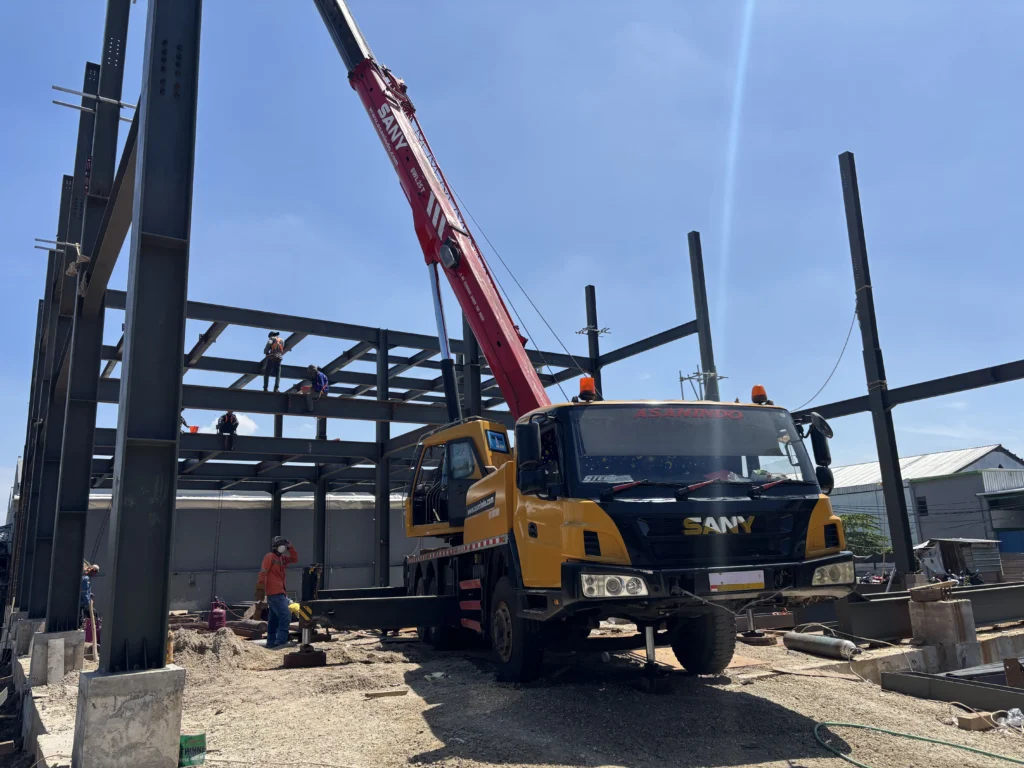
🔹 Mobile Crane 55 Ton (SANY STC550C5) — IDR 8,600,000/shift
Nominal capacity: 55 tons Practical effective capacity: 25–45 tons at medium working radius (8–20 meters) Maximum boom: 45 meters + 16 meter fly jib = ±61 meters total Maximum lifting moment: 2.009 kN·m
Our unit flagship. When the job requires large capacity at the same time far vertical reach — this is the crane that's the answer.
Use a 55-ton crane for:
- Heavy industrial lifting — tanks, pressure vessels, plant modules (30–45 tons)
- Large-scale steel erection girder (35–45 tons per girder)
- Power plant and energy generator equipment installation
- Shipyard and port work requiring large capacity
- Construction requiring a boom + flyjib to reach heights or points not reachable by standard boom
- Jobs requiring a large radius with heavy loads
Quick Reference Table: Load → Recommended Crane Capacity
This is a reference table beginning — not a substitute for an accurate load chart consultation. This figure assumes a medium working radius (8–15 meters) and an adequate safety factor:
| Actual Load Weight | Recommended Crane Capacity | Price Estimate/Shift |
|---|---|---|
| Under 4 tons | 8 Ton Mobile Crane | 3,500,000 Indonesian Rupiah |
| 4-8 tons | 8 Ton or 25 Ton Mobile Crane | Rp 3,5 |
| 8 – 12 ton | 25 Ton Mobile Crane | 4,800,000 IDR |
| 12 – 18 tons | 25 Ton or 30 Ton Mobile Crane | IDR 4,800,000 – 5,500,000 |
| 18 - 25 tons | 30 Ton Mobile Crane | 5,500,000 Indonesian Rupiah |
| 25 – 35 ton | 50 Ton Mobile Crane | Rp 8,000,000 |
| 35 – 45 ton | 55 Ton Mobile Crane | 8,600,000 IDR |
| Over 45 tons | Consult with our team | Contact us |
*Depends on the actual working radius. An 8-ton crane's effective capacity significantly decreases at radii above 8 meters.
⚠️ Important: This table is a preliminary guide. Actual effective capacity depends on working radius, boom configuration, and site conditions. Always confirm with our technical team before finalizing unit selection.
Other Factors Affecting Capacity Selection
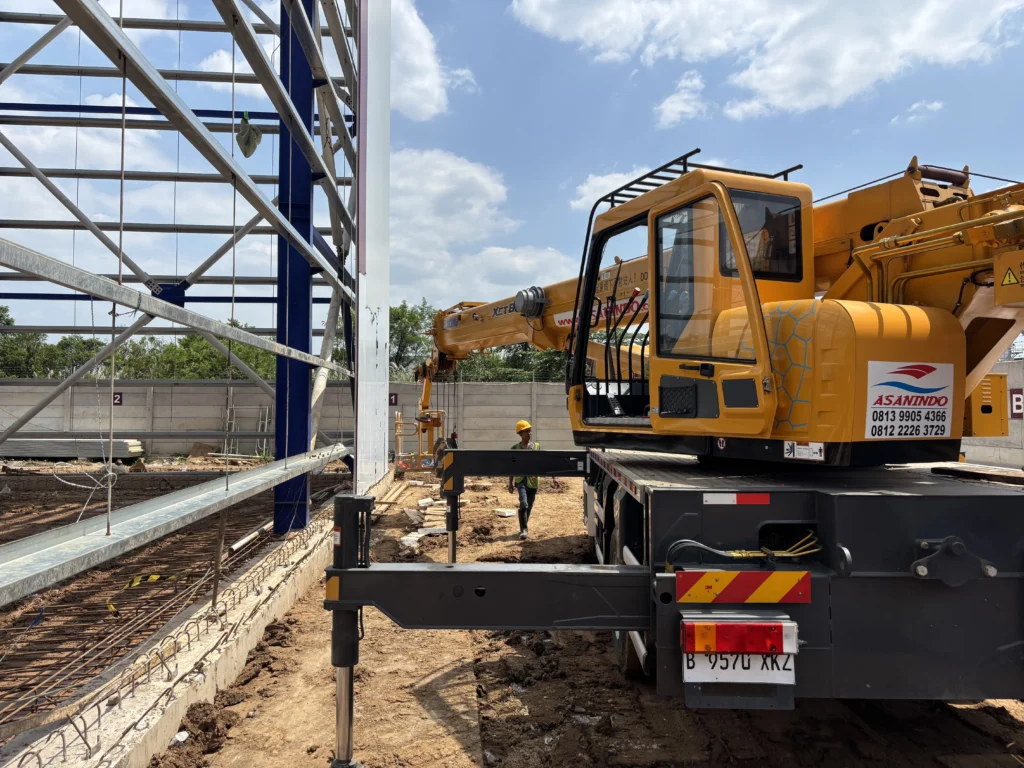
Besides load weight and working radius, here are some other factors that can influence the required crane capacity:
Lifting Height
The higher the load's target point, the longer the boom required. A longer boom at the same radius generally means less capacity. For work at significant heights (above the 5th-6th floor), consider whether the remaining capacity is still adequate with the required boom configuration.
🌬️ Wind Conditions
Strong winds add dynamic loads to cranes and the suspended loads. In locations with high wind exposure (open areas, near the coast, or at height), the effective capacity must be reduced and crane operations stopped when wind speeds exceed safe limits.
🏗️ Boom Configuration
A shorter boom length generally allows for a greater capacity at the same radius. If the situation permits, positioning the crane closer to the lift point (reducing the radius) is an effective way to increase the available effective capacity.
🌡️ Temperature and Weather Conditions
Extreme temperatures and wet conditions can affect the performance of hydraulic systems. Under normal conditions in Indonesia's climate, this is rarely a critical factor, but it needs to be considered for extended night operations.
🏗️ Types of Rigging and How to Tie Them
How the load is rigged (single-leg sling, double-leg, spreader bar, etc.) affects load distribution and the angle of pull, which can impact effective capacity. Ensure rigging methods are planned by competent personnel.
Why You Should Never “Barely Get By” When Choosing Capacity
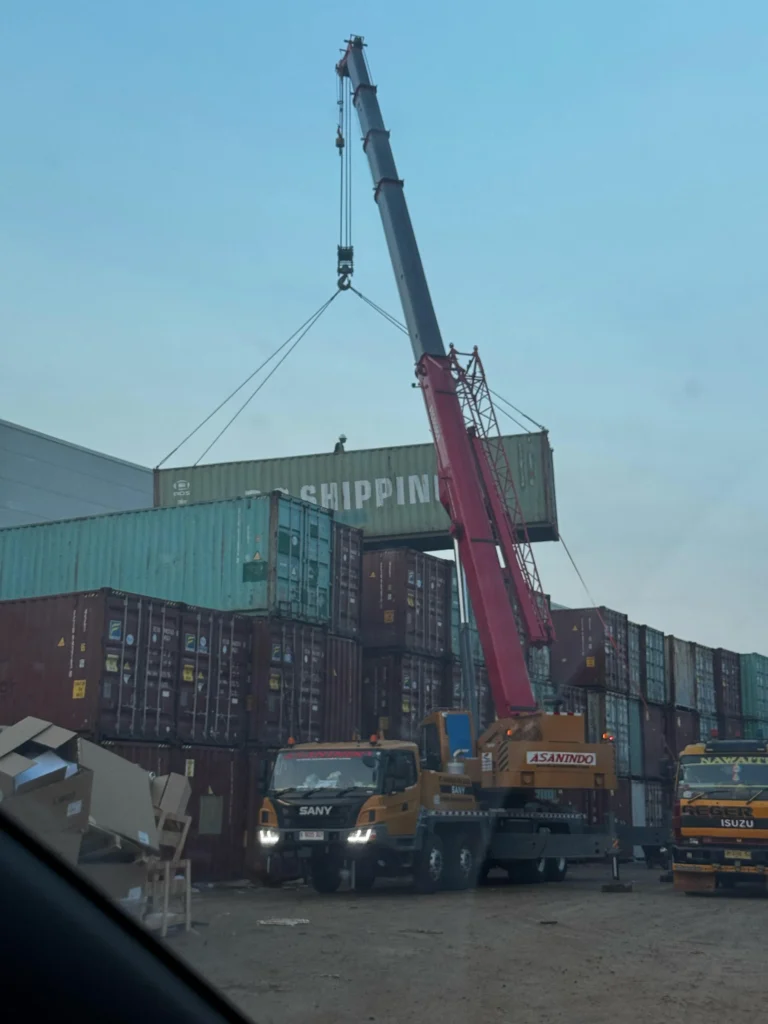
This is a non-negotiable safety principle: Never choose a crane whose capacity is just enough for the weight of the load to be lifted.
The reason isn't just about safety — though that would be reason enough. It's also about job quality Dan operational efficiency:
The crane operating at its limit capacity…
- Move slower and less precisely
- The hydraulic system operates at its maximum pressure limit, accelerating component wear.
- Does not have capacity reserves to anticipate unexpected conditions (heavier than estimated loads, non-ideal rigging, or wind).
- The LMI safety system will often beep, which is annoying and slows down work.
Crane with adequate capacity (with margin)...
- Move more smoothly and precisely
- The hydraulic system operates at optimal pressure — longer component life
- There are provisions for unexpected conditions.
- The work is completed faster because the operators can work with confidence.
One capacity level higher is often more economical overall — although the rental rate is higher, the work is completed faster and more safely, so the total project cost is actually lower.
FAQ: Technical Questions About Mobile Crane Capacity
A: Crane 30 ton means it can lift 30 tons, right? A: Not always. A 30-ton crane can lift 30 tons. at the minimum radius with optimal configuration. At a further working radius—for example, 15 meters from the crane's center—its effective capacity can drop to 10–15 tons or even lower, depending on the model and boom configuration. Always refer to the load chart to determine the actual capacity under your specific conditions.
Q: How can I know the weight of the load I will lift if there is no data? Here are some methods you can use: (1) request technical specifications from the machine or equipment manufacturer, (2) check the nameplate, which usually lists the unit's weight, (3) estimate based on volume and material (steel ±7.8 tons/m³, concrete ±2.4 tons/m³), or (4) contact our team — we can assist with estimations based on the descriptions and photos you provide.
Q: Is it better to choose a crane that is larger than necessary for “safety”? A: Yes, choosing a capacity slightly larger than your actual needs is a good practice—but “slightly larger” here means about 25–50% above your actual needs, not double. Choose a crane whose effective capacity at your working radius is in the range of 125–150% of the total load to be lifted. Going too far above your actual needs means you’re paying for unused capacity.
A: Are larger cranes always safer? A: Not always. A crane that is too large for site conditions can bring its own problems — difficulty maneuvering, excessive outrigger pressure on the ground, or inability to access the work area. The safest crane is a crane that The capacity is right, the size is right, and it is operated with the correct procedures. for the specific conditions of that location.
What if the weight of the load turns out to be more than expected after the crane is on-site? A: The LMI (Load Moment Indicator) system on modern cranes will detect if a load exceeds safe capacity and block lifting operations. If this happens, the operator must stop work and must not be forced to lift beyond capacity. To avoid this situation, always try to verify the weight of the load before the crane is mobilized.
Can the Rentalcranejabodetabek.com team help determine the right capacity? Yes, this is part of our free technical consultation service. Please let us know the type of work, estimated load weight, required lifting height and radius, and site conditions. Our team will recommend the most suitable and efficient capacity for your situation.
Contact Us — Free Crane Capacity Consultation
No need to do the calculations yourself. Our technical team is ready to help you determine the most appropriate and efficient crane capacity for your project—free of charge and with no obligation.
📞 WhatsApp / Phone (Fast Respon 24 Hours):
0813-8080-1729
(Davin Aubade)
🌐 Website: www.rentalcranejabodetabek.com
“Tell us about your job—the load weight, height, and site conditions. Our team will recommend the most suitable, safest, and most efficient crane capacity for your project budget.”
Related Articles & Services
- 🔗 8 Ton Crane Rental — Rp 3,500,000/shift, for light loads & narrow areas
- 🔗 Crane Rental 25 Ton — Rp 4,800,000/shift, intermediate machine installation
- 🔗 Crane Rental 30 Ton Rp 5,500,000/shift, most popular choice
- 🔗 Crane Rental 50 Ton — Rp 8,000,000/shift, girder & chiller
- 🔗 Crane Rental 55 Ton SANY STC550C5 — IDR 8,600,000/shift, heavy lifting
- 🔗 7 Types of Cranes and Their Functions — comprehensive guide to all types of cranes
- 🔗 Smallest Crane Capacity — solutions for narrow spaces
- 🔗 Crane Rental Price Per Shift — full rate 2026
- 🔗 Crane Rental Price List — all rental packages
- 🔗 Contact Us Consultation & booking