



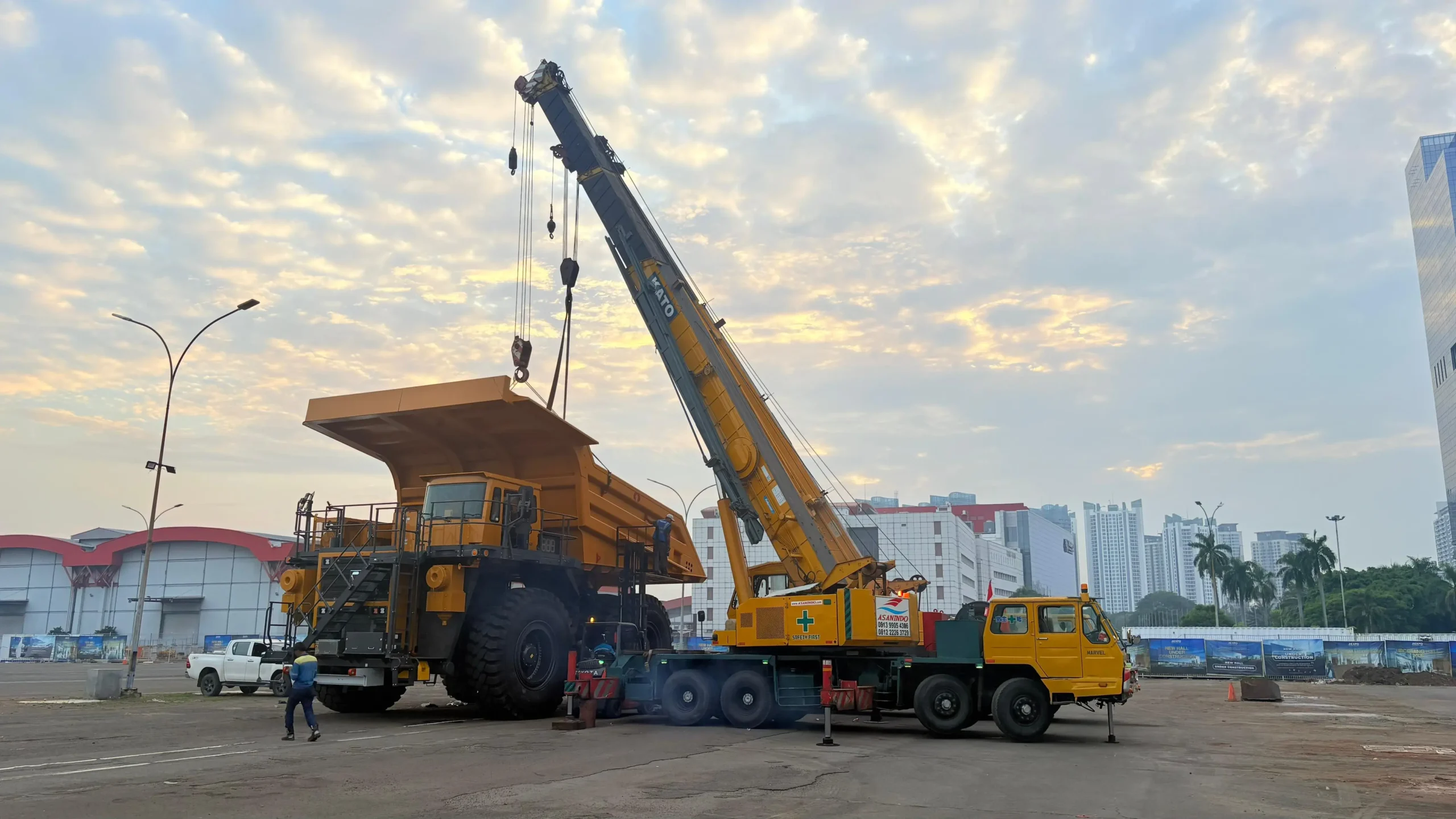
Choosing the wrong crane capacity is a common mistake on site. Too small risks crane overload and safety hazards, too large wastes money. Here's a practical guide.
Why is Crane Capacity Selection So Important?
Every lifting job has different characteristics. Lifting precast concrete girders on a highway project is clearly different from installing machinery inside a factory. The correct crane capacity determines:
- Occupational safety — A crane working beyond its capacity has the potential to collapse
- Cost efficiency A crane with a capacity greater than needed means wasted rental costs.
- Project fluency the appropriate unit minimizes downtime and obstacles in the field
Factors Determining Crane Capacity
1. Total Load Weight
This is the first factor you need to know. The load weight isn't just the weight of the object being lifted, but includes:
- Weight of slings, hooks, and rigging equipment
- Weight of spreader beam when used
As a general rule, choose a crane with a minimum capacity 25–30% larger than the total load weight for safety margin.
2. Working Radius
The working radius is the horizontal distance between the crane's center of rotation and the lifting point. The greater the radius, the smaller the lifting capacity that can be handled, even for large-capacity cranes.
Example: A 25-ton mobile crane with a 33-meter boom at a 5-meter radius may only be able to lift 12 tons safely.
3. Hook Height
How high should the load be lifted? The higher it is, the longer the boom required. A longer boom generally reduces lifting capacity.
4. Location Conditions and Accessibility
Soil conditions, road access width, and the presence of obstacles such as power lines or buildings around the work area greatly influence the selection of crane type and size.
PT Asanindo Jaya Abadi Crane Capacity Guide
| Capacity | Suitable for |
|---|---|
| 8 Ton | Industrial AC installation, electrical panels, pumps, lightweight materials |
| 25 Ton | Lightweight precast, medium steel erection, lifting in confined areas |
| 30 Ton | Girder medium, industrial machine installation, column erection |
| 50–55 Ton | Heavy lifting, precast concrete, erection of large steel structures |
The Importance of a Lifting Plan Before a Job
Before the crane enters the site, the technical team should prepare Lifting plan — document containing load calculations, radius, lifting methods, and safety procedures.
PT Asanindo Jaya Abadi provides Free lifting plan consultation for every job. This ensures that the crane unit sent is truly suitable for the needs and the job can be completed safely and on time.
Conclusion
Don't rush into choosing a crane based solely on its nominal capacity. Consider the load weight, working radius, lifting height, and site conditions thoroughly. If in doubt, consult our technical team before making a decision.